On Jan. 19, GM Canada opened its new Canadian Technical Centre (CTC) in Markham, Ontario, Canada.
One of the areas of focus at the CTC Markham Campus will be software development and innovation in the area of software and controls related to GM’s development of self-driving vehicles.
The CTC Markham Campus will be the largest new automotive and mobility software center in Canada, with more than 700 staff, as it leverages a large network of university and local company partnerships.
Self-driving Cars
Self-driving Cars
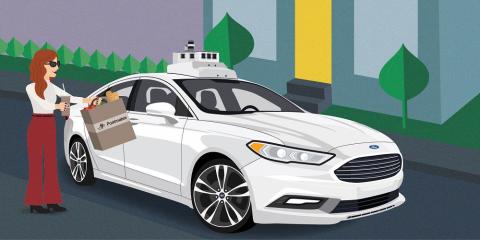
Ford and Postmates to spend 2018 exploring self-driving technologies
Ford and on-demand delivery company Postmates have announced that they will work together to “explore the sustainable application of self-driving technologies within local economies.”
Through this partnership, Postmates becomes the first on-demand delivery partner for Ford’s self-driving program.
During the first phase of their pilot, Ford and Postmates will evaluate and measure several things, including “what the merchant experience needs to be at the point of delivery, what the customer experience needs at the point of drop-off, and how the hardware of self-driving technology may need to be outfitted when integrated with an on-demand network.”
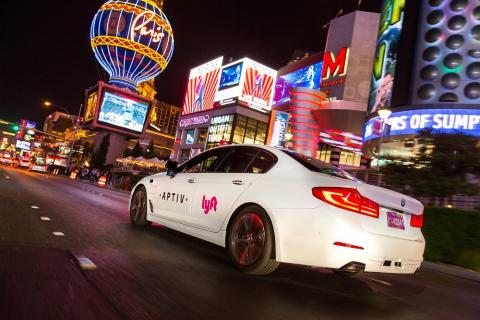
Aptiv and Lyft to provide rides in self-driving vehicles during CES 2018
During the Consumer Electronics Show (CES) 2018 in Las Vegas, Nevada, Aptiv, which is a global technology company that develops automated driving technologies, and Lyft will partner to demonstrate a “first-of-its-kind fully automated point-to-point ride-hailing experience” known as the Aptiv-Lyft CES 2018 Automated Experience.
Building off of previous CES drives performed by Aptiv, including a 6.3-mile driving loop of city streets and highways in 2017, the Aptiv-Lyft CES 2018 Automated Experience will demonstrate Aptiv's automated system and Lyft's user platform to offer rides to more than 20 destinations throughout Las Vegas.
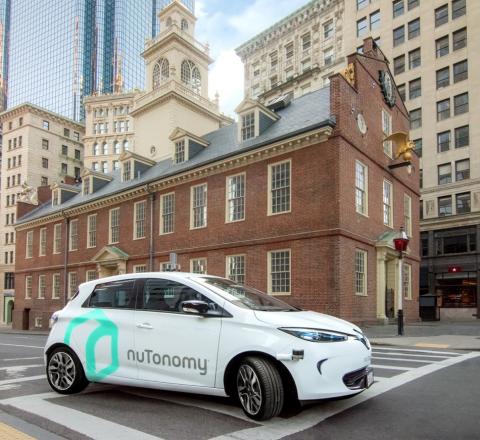
NuTonomy and Lyft bringing self-driving vehicles to Boston roads before end of 2017
After agreeing to a research and development partnership earlier this year, nuTonomy and Lyft will begin offering driverless Lyft rides to the public in Boston. According to the Boston Globe, those rides are expected to begin before the end of 2017.
Research team from Hong Kong University of Science and Technology develops unmanned car
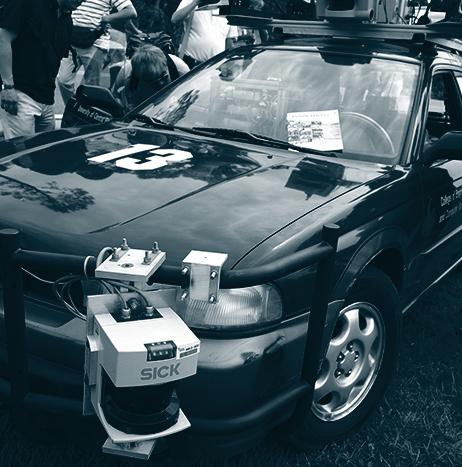
A research team from the Hong Kong University of Science and Technology (HKUST) has developed the first unmanned car in Hong Kong.
The research team from the Robotics Institute at the HKUST developed an “advanced unmanned passenger vehicle system” made up of several subsystems, ranging from the sensor systems to the dynamic modelling.
Among its many capabilities, the unmanned car can avoid obstacles as it travels using LiDAR (laser range finders), which achieves the perception of the obstacles, and can measure the surroundings 100 times per second.
The perception system, which is three-dimensional, generates more than 100,000 points per second, “indicating the pose of the vehicle to the surroundings.”
Weekend Roundup
This Week in the Unmanned Systems and Robotics World
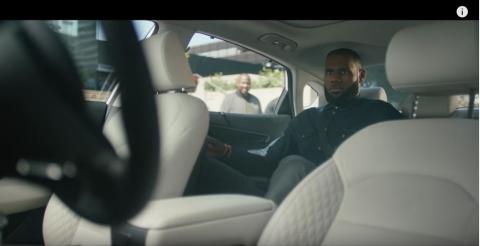
NBA superstar LeBron James is headlining a broadcast and digital ad campaign that seeks to build trust in autonomous vehicles. Produced by Intel, the first ad shows James expressing hesitation about riding in a self-driving car. After being convinced to take a ride in the vehicle, James gives his approval of the technology at the end of his ride, saying “hey yo, I’m keeping this,” by the end of the ad. (The Verge)
U.S. Senate Commerce Committee approves bill on self-driving cars
On Oct. 4, the U.S. Senate Commerce Committee unanimously approved a bill to help get self-driving cars on the road.
While the bill still has to clear a Senate vote, it appears to be on the road to passage.
Via Reuters, John Thune, the Republican who chairs the Commerce Committee, says, the bill “underscores the bipartisan desire to move ahead with self-driving vehicle technology.... The safety and economic benefits of self-driving vehicles are too critical to delay.”
Weekend Roundup
This Week in the Unmanned Systems and Robotics World
During the 2nd Quarter of 2017, SeekOps Incorporated used “proprietary miniature gas sensors” on advanced UAS platforms to detect the primary component of natural gas, methane. Compared to current leak detection operations which are conducted by vehicles or on foot using large instrumentation, the UAS deployment provides increased efficiency. SeekOps used UAS by an industrial-grade UAS platform manufacturer called Straight Up Imaging. (SeekOps)

Ford and Lyft partner to work on self-driving vehicles
Ford and Lyft have announced a new partnership that will “help both companies progress toward a more affordable, dependable and accessible transportation future” using self-driving vehicles, according to Sherif Marakby, Ford Vice President, Autonomous Vehicles and Electrification.
Weekend Roundup
This Week in the Unmanned Systems and Robotics World
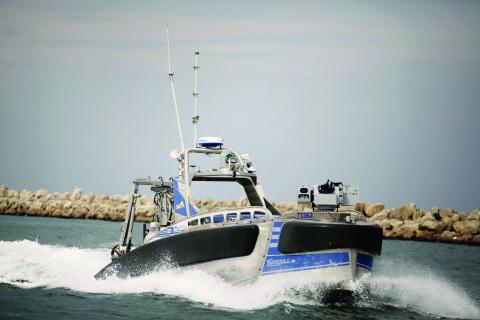
Elbit Systems’ multi mission USV, named Seagull, performed a live demonstration of a remotely operated Anti-Submarine Warfare (ASW) mission. Via Satellite Communication (SATCOM), the Seagull USV performed the operational ASW mission using control consoles located approximately 3,515 kilometers away in Elbit Systems' booth at the DSEI Exhibition in London. The Seagull USV was sailing in the Haifa Bay, Israel during the demonstration. (Elbit Systems)