
KPIT Technologies has partnered with a Silicon Valley-based lifelong learning platform called Udacity to upskill and build the engineering talent ecosystem for autonomous technology, including self-driving cars and autonomous flight.
A global technology partner to OEMs and Tier 1s, KPIT helps these companies accelerate the implementation of next generation vehicle technologies, including autonomous driving.
Self-driving Cars
Self-driving Cars
Waymo granted landmark permit to test fully driverless cars on public roads in California
Just a few weeks after its self-driving vehicles surpassed 10 million miles driven on public roads, Waymo has announced that the California Department of Motor Vehicles has granted the company the first permit in the state to begin driverless testing on public roads.
According to Waymo, the permit is the result of new DMV regulations that took effect in April that allow companies to apply for fully driverless testing within carefully defined limits.
Waymo, which has been testing its technology in the state of California for almost a decade, notes that this is the first time California has allowed tests on public roads of fully driverless cars without a test driver sitting in the driver’s seat.
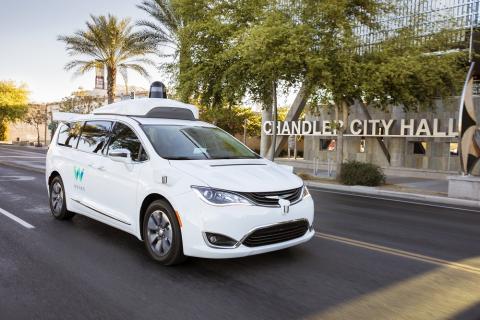
Addison Lee Group and Oxbotica aim to provide self-driving services to customers in London by 2021
London-based private hire taxi company Addison Lee Group and autonomous vehicle software company Oxbotica have agreed to a “wide-ranging strategic alliance” that accelerates the implementation of autonomous vehicles to the streets of London.
Under the agreement, the two companies will work together on the development, deployment and operation of autonomous vehicles, with a goal of providing self-driving services to customers in London by 2021.

From Unmanned Systems Magazine: Self-driving cars ‘will be a reality,’ but regulatory hurdles remain
For the automobile industry, it might be said that everything old is new again, helped along by the coming of automated vehicles.
As in the early days of the industry, many players are entering the AV space, regulators are wondering how to keep up and the public is unsure of the technology.
“Automated or “self-driving” vehicles are a future technology rather than one that you’ll find in a dealership tomorrow or in the next few years,” the National Highway Traffic Safety Administration says in an overview of its guidelines for automakers and state regulators. “A variety of technological hurdles have to be cleared, and other important issues must be addressed before these types of vehicles can be available for sale in the United States.”
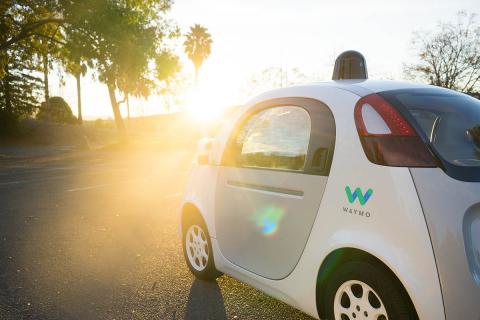
Zoox offering autonomous rides as part of Global Climate Action Summit
As part of the Global Climate Action Summit, which brings together a variety of parties to discuss climate action opportunities, self-driving car startup Zoox is offering autonomous rides in San Francisco this week.
The company has partnered with the Fairmont hotel in San Francisco to transport select summit guests between the Fairmont and Moscone Center in Zoox’s self-driving Toyota Highlander test cars. Guests that ride in the cars will be determined by Zoox, Fairmont and the Summit.
The objective of the tests is to showcase the potential of Zoox’s zero-emission autonomous technology—which hasn’t been fully realized yet—to guests.

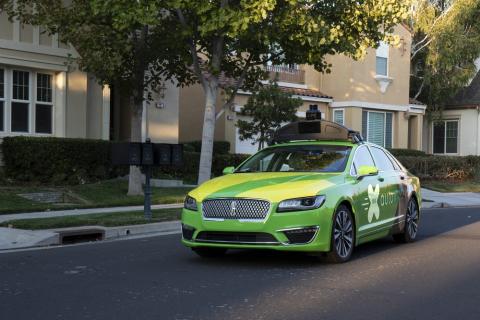
AutoX launches self-driving grocery delivery pilot program in San Jose
On August 27, self-driving car company AutoX launched its grocery delivery Pilot program in San Jose, California.
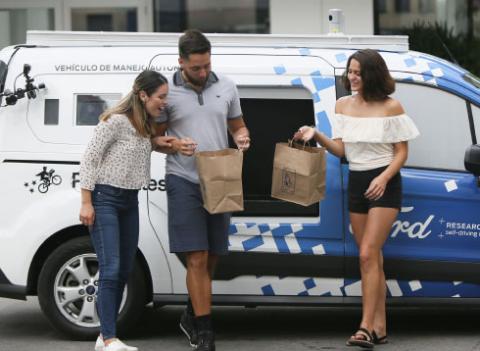
The grocery delivery and mobile store pilot allows users to order and receive fresh produce and other goods, with AutoX’s self-driving cars making the deliveries.
The pilot will be available to customers in geo-fenced areas near AutoX’s home in San Jose, and regular expansions are expected to occur every few weeks.
To start, users will download the AutoX app, where they can browse and order items such as, but not limited to, fresh perishables, vegetables, fruits, etc. Throughout their ride over to customers, the groceries will be well-preserved in a temperature-controlled environment.
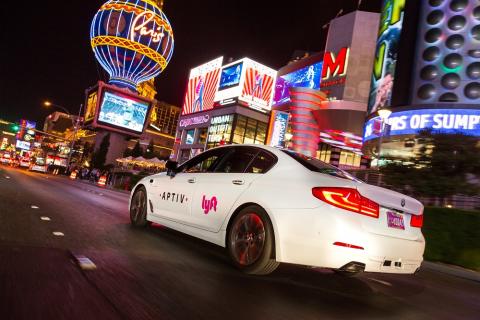
Lyft and Aptiv complete 5,000 self-driving rides
Lyft and Aptiv have announced that they have completed 5,000 rides in Aptiv's self-driving vehicles.
The companies launched their self-driving program at the 2018 Consumer Electronics Show (CES) in January, and after a successful CES run, the program was extended to be an ongoing Lyft mode for Las Vegas in May, with a fleet of Aptiv self-driving vehicles launching on Lyft’s network.
“Hitting 5,000 consumer rides is a major milestone, not just for the Aptiv and Lyft, but for the entire mobility space,” says Glen De Vos, CTO of Aptiv and president of Aptiv’s Mobility and Services group.
“This is the first of its kind commercial self-driving program, and we are proud to be offering AVs for public use today.”
New reports shed light on automated vehicle future
Two recent reports highlight the way that industry and government are seeing the automated vehicle market shaping up.
The Governors Highway Safety Association, made up of state and territory highway safety officials, released “Preparing for Automated Vehicles: Traffic Safety Issues for States,” funded by insurance giant State Farm and drawing on research, survey findings, government documents and other sources.
From Unmanned Systems Magazine: What a self-driving world could look like
That our future includes self-driving cars is a given. Certainly, every auto manufacturer and urban planner is preparing, or thinking about preparing, for the day. But what form that future will take, and what our daily lives will look like as a result, remains ripe for prognostication.
In an interview with The New York Times, Chris Anderson, the former editor of Wired magazine, cofounder of 3D Robotics and founder of DIY Robotics — in other words, someone who knows and thinks a lot about the world of autonomous vehicles — said he continues to be confounded by the fact that people so often ask him a question that, to his mind, hardly needs asking: What will people do inside driverless cars?

Waymo expanding its self-driving car presence in Metro Phoenix through new partnerships
Through its early rider program, Waymo has learned from its early riders that most of their rides are to run errands, shop for groceries, commute to work, head to dinner or fix their personal vehicles.
With this in mind, Waymo has launched several initiatives to continue testing its self-driving cars in Metro Phoenix, while meeting the “top rider needs.”
“We’re proud to be a part of Metro Phoenix and are excited to grow and add partnerships that support the cities we operate in, bring unique value to our riders, and give more people access to a safe, self-driving future,” Waymo says in a blog post.