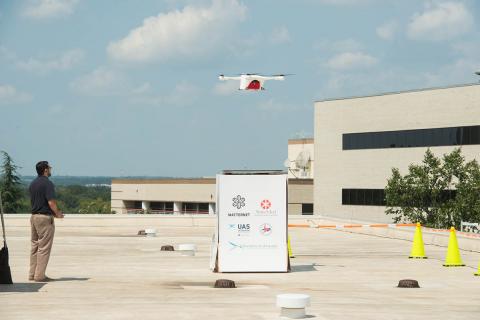
On Friday, April 12, the California Department of Motor Vehicles (DMV) released proposed regulations that “establish a path for companies to test or deploy light-duty autonomous motor trucks (delivery vehicles) on the state’s public roads.”
Under the proposed regulations, companies can test autonomous delivery vehicles that weigh less than 10,001 pounds with an approved permit from the DMV, as long as they don’t charge a delivery fee.
To make their autonomous technology commercially available, companies must apply for a deployment (public use) permit.
Regulatory
Regulatory
Argo AI receives permit to test autonomous vehicles in California
According to TechCrunch, Pittsburgh-based self-driving car startup Argo AI has received a permit from the California Department of Motor Vehicles that allows the company to test its autonomous vehicles in the state.
The permit is for one vehicle and two drivers.
Launched in 2016, Argo AI received a $1 billion investment from Ford Motor Company in 2017, just months after forming. Together, Ford and Argo AI are looking to develop a virtual driver system for Ford’s fully autonomous, SAE level 4-capable vehicles, which Ford hopes to have on the roads by 2021.

Ontario looks to grow its autonomous vehicle industry
During a recent visit at the University of Waterloo, Ontario, Canada’s Minister of Transportation Jeff Yurek showed his support for the innovation and growth of the autonomous vehicle industry within the Canadian province.
Ontario has updated its Automated Vehicle Pilot program to allow for more testing of emerging technologies, as well as to support future sales of the next generation of automobiles. These actions are a part of a recent package to create jobs by eliminating red tape and burdensome regulations.
Airobotics receives waiver to operate UAS BVLOS from Remote Operations Center in Australia
Airobotics has announced that it recently obtained the first and only Civil Aviation Safety Authority (CASA) approval in Australia to operate automated UAS from its Remote Operations Center (ROC) beyond visual line of sight (BVLOS) with no aircrew needed at the client site.
Remote pilots are located at a designated Remote Pilot Station (RPS) within Airobotics Australia’s ROC. They are operating more than 1,000 kilometers away from onsite systems at the customer sites.
According to Airobotics, this new “man on the loop” level of operations allows human operators to supervise flights without the need for “man in the loop” pilots to intervene in flight operations.

Meet the IPP Sites: Collaboration plays integral role in North Dakota DOT's IPP efforts
When the UAS IPP was initially announced over a year ago, governments, municipalities and companies across the United States envisioned conducting landmark UAS operations in an effort to push the industry forward and make this technology a regular part of society.
One of the entities with interest in participating in the program was the North Dakota Department of Transportation (NDDOT), which initiated a conversation with the Northern Plains UAS Test Site — located in Grand Forks — to collaborate on the pursuit of this endeavor.
“We felt it would be a stronger project pulling in key stakeholders across the state,” Russ Buchholz, UAS integration program administrator at NDDOT, tells Unmanned Systems.
FAA moves forward with rulemaking on UAS flights over people, safety, traffic management
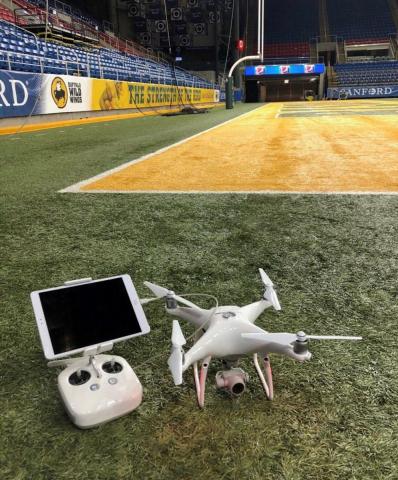
In a move that could further accelerate the unmanned aircraft systems industry, the U.S. Federal Aviation Administration today announced a notice of proposed rulemaking for the operation of small UAS over people, as well as another about the safe and secure operations of drones.
In addition, it announced three contracts for UAS test sites to develop an unmanned traffic management (UTM) program that will be separate from the existing air traffic management system but is expected to complement it.
Canada's new UAS rules set to go into effect on June 1
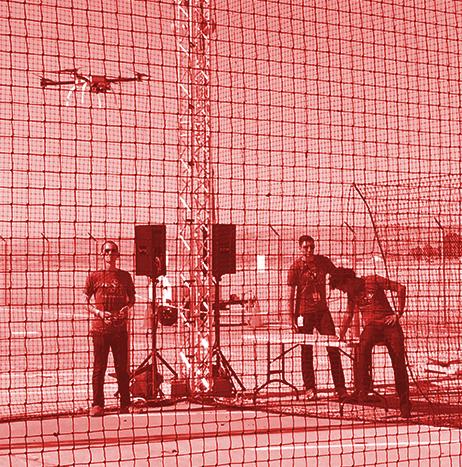
On Jan. 9, Canada’s Minister of Transport, Marc Garneau, announced Canada’s new rules for UAS, which will go into effect on June 1, 2019.
The rules will apply to all UAS pilots flying UAS between 250 grams and 25 kilograms (.55 pounds to 55 pounds) that are operated within the pilot’s visual-line-of-sight, regardless of whether the UAS is flown for fun, work or research.
Transport Canada says that the new simplified rules reflect a great amount of consultation with Canadians and the industry, with the final regulations introducing two main categories of UAS operation—basic and advanced—that are based on distance from bystanders and airspace rules.
uAvionix selects Leesburg, Virginia, as the location for its 'HQ2'
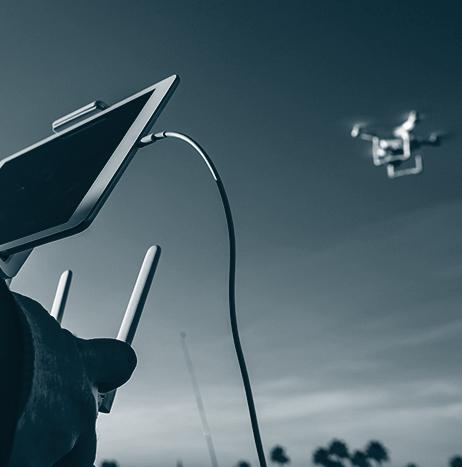
Amazon isn't the only company to select northern Virginia for its second headquarters. On a smaller scale, uAvionix has announced plans to establish an office location in Leesburg, Virginia.
Known as “HQ2,” the location was selected after uAvionix compared important criteria such as transportation options, talent availability, and local craft beer quality during a nationwide search for the perfect location.
Expected to open in Feb. 2019, HQ2 will focus on business operations, development, and regulatory engagement, especially in the UAS market.
Meet the IPP Sites: North Carolina Department of Transportation and partners using UAS to deliver medical supplies in North Carolina
During AUVSI’s Xponential conference and exhibition in Denver, the North Carolina Department of Transportation was informed that it had been selected as one of the 10 participants for the FAA’s UAS Integration Pilot Program (IPP).
The main focus of NCDOT’s proposal for the UAS IPP is working with global drone delivery companies to establish a network of medical distribution centers that can use drones to make medical deliveries, says Basil Yap, the head of NCDOT’s UAS program and lead on the IPP work.
Currently, couriers are the primary form of transport of blood and other supplies to hospitals and testing facilities, but NCDOT believes that UAS could get these supplies and test results to medical providers much faster.