In September, the Tacoma, Washington City Council passed Resolution 40658 supporting responsible recreational drone use in Tacoma. The resolution directs the City Manager to establish a point of reference on the city's website connecting Tacoma community members to federally established laws and regulations, as well as recommended best practices.
Regulatory
Regulatory

Speedbird Aero receives regulatory approval to operate two experimental drone delivery routes in Brazil
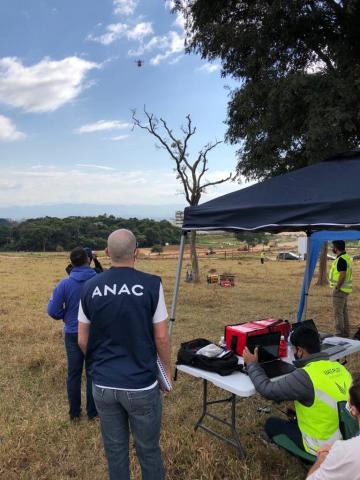
Speedbird Aero, a Latin American drone delivery company, has become the first company in Latin America to win regulatory approval for a drone delivery operation, as the company has received regulatory approval from Brazil's National Civil Aviation Agency, also known as ANAC, to operate two experimental drone delivery routes in Brazil.
AVS speakers emphasize importance of uniform legislation, safety for autonomous vehicles
From helping address the driver shortage currently plaguing the trucking industry to transporting passengers to and from their destinations, autonomous vehicles (AV) have no shortage of potential use cases for the present and beyond.
“As autonomous technology comes to market, it’ll have a broad and positive impact on the overall industry,” said Shawn Kerrigan, co-founder and chief operating officer of self-driving truck technology company Plus.ai, during the Automated Vehicle Symposium (AVS).
Before these vehicles can hit the roads at scale, though, there first needs to be some sort of uniform legislation to guide this technology, many speakers noted during AVS, which took place as a fully virtual show this year.

Parrot works with French authorities and regulators to address progressing UAS regulations in France
To address the rapidly progressing drone regulations in France, Parrot has announced that it has worked closely with French authorities and regulators.
Need for global harmonization dominates conversation during Episode I of FAA UAS Symposium – Remotely Piloted Edition
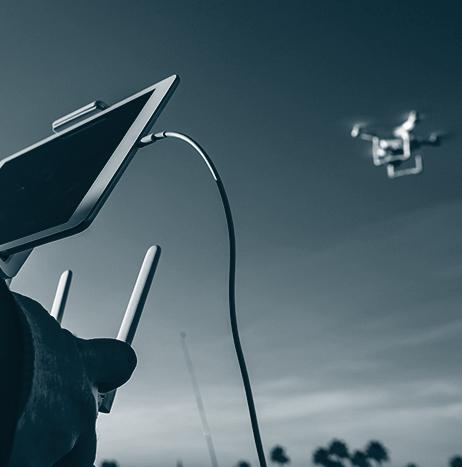
For the UAS industry to continue growing and evolving, some sense of global harmonization surrounding standards and best practices will need to be achieved, according to speakers during Episode I of the 5th annual FAA UAS Symposium – Remotely Piloted Edition.
“To me, the real key to harmonization is the standards. It’s getting performance-based standards that we can all agree to,” says Jay Merkle, executive director, Office of UAS Integration, FAA.
Chris Rocheleau, executive director, Office of International Affairs, FAA, explains harmony as “making sure everyone has those best practices to advance this [technology] carefully, slowly, and safely.
A rising tide lifts all boats: AUVSI's Maritime Advocacy Committee celebrates two-year anniversary
A rising tide lifts all boats is more than an aphorism for AUVSI’s Maritime Advocacy Committee (MAC), which today celebrates its two-year anniversary.
Eight companies selected to help establish requirements for future Remote ID suppliers
On Tuesday, May 5, the FAA announced the eight companies that will help the Federal government establish requirements for future suppliers of Remote Identification (Remote ID). With Remote ID, UAS will be able to provide identification and location information while operating in the nation’s airspace.
Through a Request for Information process in Dec. 2018, Airbus, AirMap, Amazon, Intel, One Sky, Skyward, T-Mobile, and Wing have been selected to develop technology requirements for future Remote ID UAS Service Suppliers (USS).
FAA highlights waivers that can help during COVID-19 pandemic
The Federal Aviation Administration is granting drone flight waivers to help fight the COVID-19 pandemic, according to an agency official, but some won't extend beyond current stay-at-home restrictions.
FAA safety liaison Rachel Carlstrom spoke during a video conference — sponsored by AUVSI's North Carolina chapter and media company MarketScale — and said various efforts within the Integration Pilot Program (IPP) are proving helpful during the COVID crisis.