
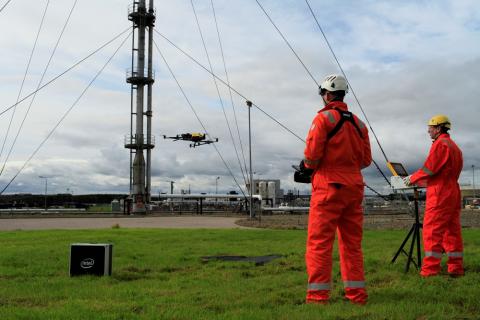
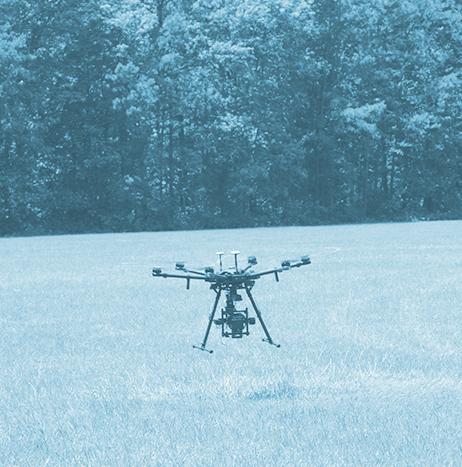
Intel and Cyberhawk have announced that they successfully inspected a gas terminal in St Fergus, Scotland using an Intel Falcon 8+ UAS.
The companies say that traditional inspections of this scale require facility shutdowns, which could take days to weeks to bring the plant offline and make accessible for workers. Once these plants are offline, the workers rely on harnesses and cable equipment to hang midair while manually collecting information on a structure, which can be both dangerous and time consuming.
Inspection
Inspection
QGC to leverage Remotely Piloted Aircraft Systems through contract with Insitu
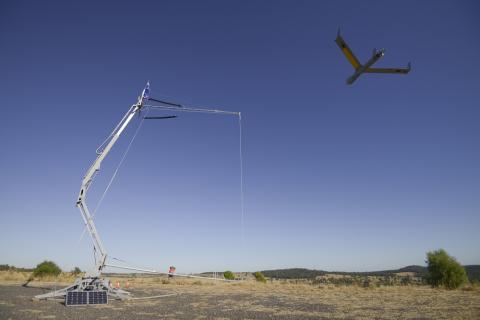
Insitu and QGC have announced a contract with each other that will result in Remotely Piloted Aircraft Systems (RPAS) from Insitu performing automated infrastructure inspection and management services at QGC’s operations within Queensland, Australia.
Described as a “first-of-its-kind program” in Australia, the contract in the Surat Basin “represents a significant move towards the use of autonomous air vehicles and advanced analytics in the area of broad acre infrastructure operations and maintenance.”
Geomni says UAS can help solve tree coverage imagery problem
Details of residential and commercial structures can be obscured by overreaching tree canopies when satellite and aerial imagery are used to document property values and evaluate roof damage, but using UAS to collect aerial images of rooftops could solve this issue according to Geomni, a Verisk business.
Geomni, which provides information about residential and commercial structures by utilizing remote sensing and machine learning technologies, says that since UAS can operate in close proximity to the subject, they can provide extremely detailed images, and “deliver superior sub-centimeter resolution for more accurate and detailed data.”

UAVOS uses UAV to inspect oil refinery in Kazakhstan
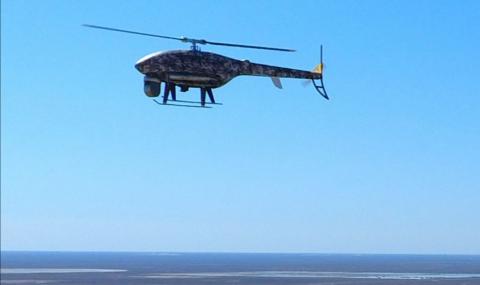
UAVOS Inc. has announced that it completed an aerial inspection of the refinery production infrastructure in Kazakhstan—located in Eastern Europe—using an unmanned complex based on the UVH-29E gasoline-powered helicopter.
Equipped with a gyro-stabilized platform with a FullHD day camera, the UAV completed all of its objectives, including the monitoring task with a simultaneous real time video image transmitting, and it also performed a survey of the flare units.
“It is one of our first projects in Eastern Europe to replace traditional methods of inspection in the oil and gas and energy sectors with robotic technologies,” says Vadim Tarasov.
AUVSI chapter report: Hurricane Irma reveals strengths and weaknesses of UAS involvement
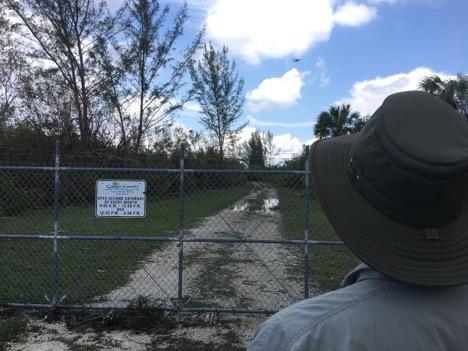
Hurricane Irma clobbered a good portion of Florida on Sept. 10, further elevating the role of unmanned aircraft systems (UAS) in disaster response and recovery operations. Soon after the storm had passed, drones quickly took to the air to provide situational awareness for first responders and assess damage to critical infrastructure providers.
However, planning for UAS operations started well before irma ever made landfall. A statewide UAS safety briefing web conference coordinated by the AUVSI Florida Peninsula Chapter (FPC) was held Saturday, Sept. 9.
Measure announces new franchise location in Denver area
According to Unmanned Aerial Online, Measure, which provides UAS services for enterprise customers, has announced a new franchise location in Castle Rock, Colorado, which is in the Denver area.
The Castle Rock office will use UAS to provide infrastructure inspection services for businesses in the metropolitan area.
Kraken Robotic Systems partners with Avitas Systems to advance robotic subsea inspection technologies
During General Electric’s (GE) Mind + Machines event in San Francisco, California, it was announced that Kraken Robotics Inc.’s wholly-owned subsidiary, Kraken Robotic Systems Inc., entered a strategic partnership with Avitas Systems, which is a GE Venture that advances the inspection services industry across various sectors through predictive data analytics, robotics, and artificial intelligence (AI).
Through the partnership, the two companies will integrate AUVs, acoustic and laser sensor technology and AI-based navigation software into unique subsea inspection systems for several industries, including oil and gas, offshore renewable energy, and shipping.
Black & Veatch and Aeryon Labs utilize UAS to enhance utility asset data
Black & Veatch and Aeryon Labs have collaborated to launch an end-to-end asset management inspection system that uses UAS technology for global energy clients.
Using Aeryon’s commercial UAS hardware, software and services, crucial infrastructure condition data can be captured, and that data is integrated by Black & Veatch into the existing enterprise asset management (EAM) systems of a utility.
This streamlined system by Black & Veatch and Aeryon Labs expedites inspection times, lowers inspection costs, and speeds up the integration of data into EAM systems.
Northern Maine Community College incorporating UAS into curriculum
Northern Maine Community College (NMCC) Wind Power Technology Instructor Wayne Kilcollins, who recently became certified to fly UAS for business and work, will begin teaching Wind Power Technology students at the college about UAS.
Kilcollins will use his knowledge to teach students about the technology, and demonstrate how to use UAS to inspect wind turbine blades and nacelles. Kilcollins will do this, in part, using a UAS that NMCC purchased.
“We always aim to provide our students with the latest industry practices to keep them highly competitive in the workforce,” Kilcollins says.