
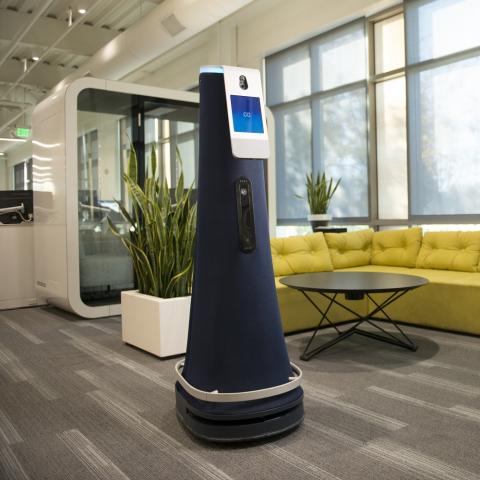
Cobalt Robotics, a developer of indoor autonomous robots, has announced that it has raised $35 million in Series B financing, which is expected to help the company expand its services throughout the domestic United States.
Combining autonomous patrolling robots with human specialists, Cobalt’s Robots-as-a-Service model allows organizations to provide a 24-hour security strategy that complements current security assets such as manned security guards and access control systems (ACS).
According to Cobalt, this comprehensive strategy results in a “highly effective” security program that not only reduces costs, but also features robots that remain up-to-date with the “latest and greatest software.”
Investment
Investment
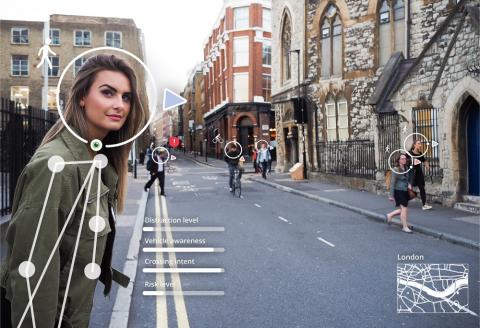
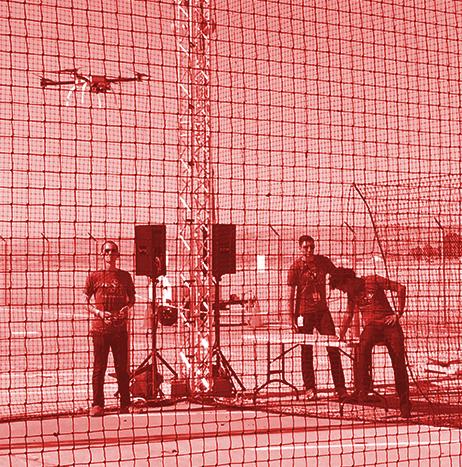
UAS facility to be established at Houma-Terrebonne Airport through U.S. Department of Commerce grant
The Houma-Terrebonne Airport Commission of Houma, Louisiana has been awarded a $1.3 million grant to make the necessary infrastructure improvements needed to establish a UAS facility at the Houma-Terrebonne Airport. The project is expected to help create 150 jobs, retain 70 jobs and generate $50 million in private investment.
The investment was made by the Economic Development Administration (EDA), an agency under the U.S. Department of Commerce.
“The Trump Administration is working diligently to empower innovators who fuel job creation in communities across the nation,” says Secretary of Commerce Wilbur Ross.
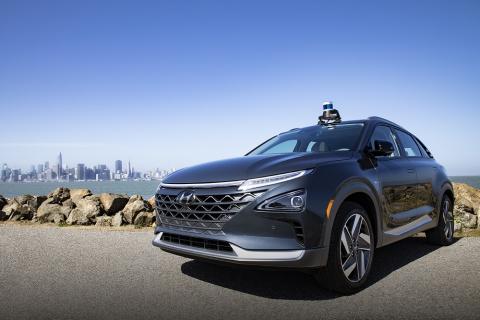
Hyundai, Kia invest in Aurora to accelerate development of autonomous vehicle technologies
In an effort to accelerate the development of autonomous vehicle technologies, Hyundai Motor Group and Kia Motors Corporation have invested in autonomous technology developer Aurora.
Having formed a strategic partnership in 2018, the companies say that this investment will strengthen that partnership which, thus far, has seen Hyundai, Kia, and Aurora working together on self-driving technologies on NEXO, Hyundai’s flagship fuel cell vehicle.
The companies will use this new investment to expand research to a wide range of models, and to build an optimal platform for Hyundai and Kia’s autonomous vehicles.
Raptor Maps plans to expand global presence and develop new products using latest funding
Raptor Maps, a company that makes it simple and affordable for solar companies to adopt drone technology as a tool, has announced a new round of funding from veteran energy investors.
Raptor Maps develops software to build geospatial, digital models of photovoltaic (PV) system asset health. Over the last year, the company has analyzed more than 25 million solar panels in 21 countries across 6,000 MW. Uses include PV system inspection and verification, due diligence and construction site installation progression, to name a few.

Boeing announces investment in Robotic Skies
Boeing has announced an investment in Robotic Skies, a provider of services that connect manufacturers and operators of commercial UAS with a global network of more than 170 civil aviation authority-certified repair stations.
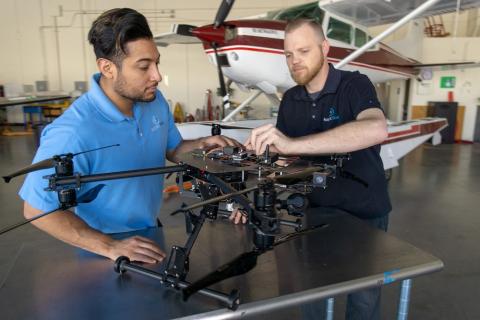
Planck Aerosystems to scale marketing efforts using recently awarded $25,000 voucher
As part of its participation in the inaugural Defense Innovation Voucher Program (DIV) Grand Prize Pitch, Planck Aerosystems, a developer of specialized drone technology, was awarded a $25,000 voucher.
Based on their accomplishments, goals and overall involvement in the program, five DIV companies were chosen to participate in the DIV Grand Prize Pitch. Planck Aerosystems was selected as the winner by a live voting audience and a panel of judges.
The other four finalists were EpiSci (EpiSys Science Inc.), Fuse Integration, Inc., GET Engineering Corporation and Trabus Technologies.
Invert Robotics looks to increase global footprint of its climbing robot
Robotics company Invert Robotics has closed an $8.8 million round of financing. The company will use the strategic investment to scale its team, open a U.S. office and expand its technology platform and industry-specific technologies.
Headquartered in New Zealand, Invert Robotics’ goal is to increase the global footprint of its climbing robot, which is the first robot specifically designed to inspect the integrity and safety of non-magnetic, hazardous environments, according to the company.
“Our climbing robots go where other robots cannot and people should not,” says Invert Robotics Managing Director Neil Fletcher.
Locus Robotics raises $26 million in Series C funding
Locus Robotics, a developer of autonomous mobile robots for warehouses, has raised $26 million in Series C funding.
Locus will use the funding to scale production of its multi-bot platform for warehouse fulfillment. The funding will also be used to expand Locus' sales and marketing efforts, both in North America, and internationally.
“We have seen a massive uptick in demand for the flexible automation incorporated into Locus’s multi-bot solution, which is uniquely suited to address these challenges,” says Rick Faulk, CEO of Locus Robotics.
FLIR Systems invests in global UAS operations company DroneBase
FLIR Systems has made a strategic investment in global UAS operations company DroneBase.
Through DroneBase, businesses have access to one of the largest UAS pilot networks.
With this investment, FLIR will be the exclusive provider of thermal product technologies and the official small UAS thermal imaging training provider for the DroneBase enterprise pilot network through the FLIR Infrared Training Center (ITC).
“Our investment in DroneBase helps expand the adoption of FLIR thermal imaging technology by putting it in the hands of more pilots who fly drones every day,” says Jim Cannon, president and CEO of FLIR.