The Motorola Solutions Foundation, which is the charitable arm of Motorola Solutions, has awarded the Airborne International Response Team (AIRT) a grant that it will use to expand its DroneResponders program, which focuses on supporting the awareness and education of UAS use by public safety agencies and first responders across the globe.
“We are very honored to have been selected as one of the Motorola Solutions Foundation 2019 grant awardees,” says Christopher Todd, executive director of AIRT.
“This funding will help DroneResponders make an even greater impact in supporting first responders using drones for good in their local communities and beyond.”
IHP
IHP

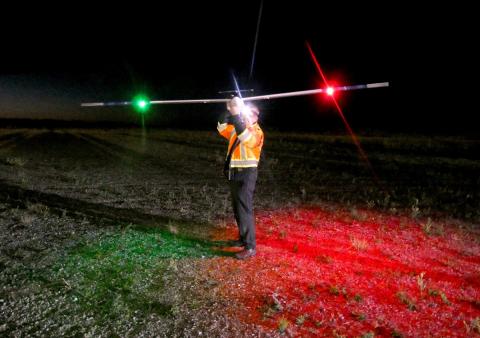
HiDRON stratospheric glider completes record-setting stratospheric flight
UAVOS and Stratodynamics have announced that their HiDRON stratospheric glider has completed a record-setting stratospheric flight.
Released from a Canadian Space Agency scientific gondola at an altitude of 111,434 feet, the glider performed a four hour controlled flight, eventually landing at Iroquois Falls Airport, which is about 80 kilometers from the Timmins, Ontario launch site.
Oceans Unmanned, DARTDrones train NOAA personnel on UAS operations
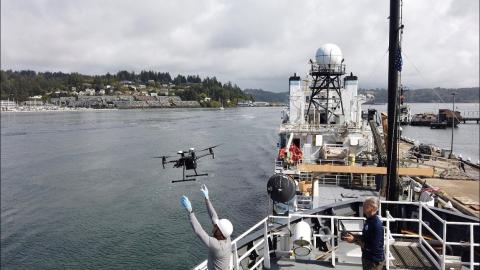
Seven NOAA ship officers and Navigation Response Team members recently received training on UAS operations from Oceans Unmanned and DARTDrones at the NOAA Marine Operations Center in Newport, Oregon.
Conducted over the course of two days, training included classroom instruction, as well as hands-on flights that focused on research and mapping missions conducted from vessels. Students also practiced launch and recovery procedures, and programmed mapping missions from the deck of the NOAA Ship Hi‘ialakai while alongside the marine facility.
HAWK30 solar HAPS UAS successfully completes first flight
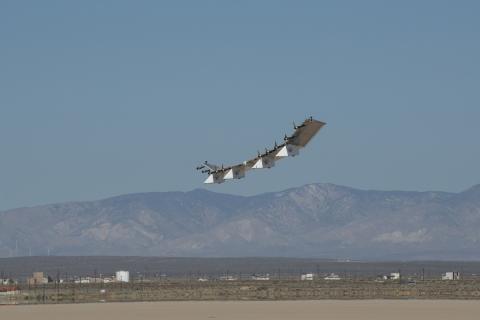
AeroVironment has announced that on Sept. 11, the HAWK30 solar HAPS UAS successfully completed its first flight at the NASA Armstrong Flight Research Center in California.
Funding for the design development and demonstration of the UAS comes from HAPSMobile Inc., which is a joint venture created by AeroVironment and SoftBank Corp.
“The first flight of HAWK30 builds on more than two decades of pioneering HAPS technology development and demonstration by the AeroVironment team, and comes only two years since SoftBank joined us in this endeavor,” says Wahid Nawabi, AeroVironment president and chief executive officer.
Kespry, XAP 360 partner to deliver country-wide drone-based residential roofing inspection program
Kespry has partnered with a nationwide network of certified roofing contractors called XAP 360 to deliver a new country-wide drone-based residential roofing inspection program.
Designed with transparency and accuracy when conducting roof inspections for homeowners in mind, the program is expected to ensure that claims payouts occur “rapidly.” XAP 360 and Kespry say that they want to “regain the trust of residential property owners” who have had frustrating experiences by establishing verifiable, credible standards for residential roof inspections, which involves artificial intelligence and machine learning-based analytics.
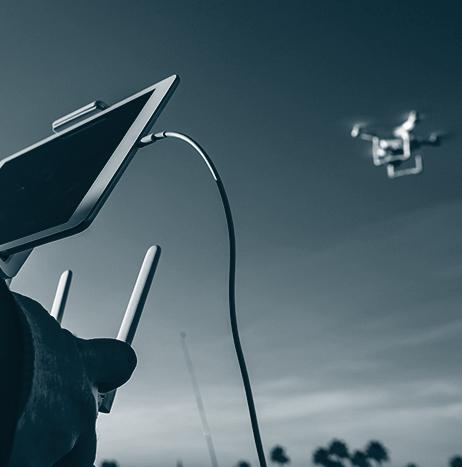
AIRT uses UAS to perform damage assessment operations in the Bahamas following Hurricane Dorian
Members of the Airborne International Response Team (AIRT) formed a joint-reconnaissance team with members of the Southeast Florida Region 7 All-Hazards Incident Management Team (SEFL-R7 AHIMT) to survey damage across the hardest hit areas of the Grand Bahama and the Abaco Islands in the Northern Bahamas following Hurricane Dorian.
Using UAS, the team conduced damage assessment operations at the University of the Bahamas – Northern Campus, and nearby neighborhoods that were hit hard by the deadly hurricane.
“We saw first-hand the damage that this hurricane leveled upon the Bahamas,” says Nigel Baker, team coordinator and incident commander of SEFL-R7 AHIMT.

Oneida Indian Nation partners with NUAIR to use UAS to monitor and protect land and environmental resources
In an effort to enhance its ability to monitor, observe, manage and protect its lands and environmental resources using UAS technology, the Oneida Indian Nation, which is an indigenous nation of American Indian people whose sacred and sovereign homelands are located in Central New York, has partnered with Northeast UAS Airspace Integration Research (NUAIR).
The Nation will leverage NUAIR’s UAS and related technologies, as well as its expertise, to gather and assess data about its lands and environmental resources, mainly from isolated or hard-to-reach areas. The Nation will also use this technology to further implement and enforce programs aimed at protecting these resources.
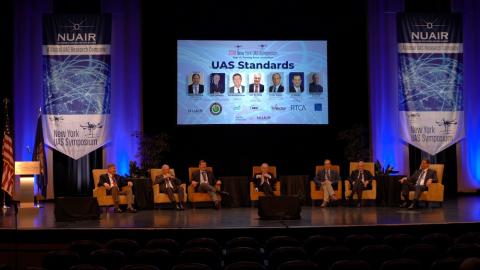
2nd annual NY UAS Symposium to highlight issues facing industry, importance of UTM
The second annual New York UAS Symposium, hosted by Northeast UAS Airspace Integration Research (NUAIR), will look to build off of a successful 2018 symposium that brought in more than 300 participants.
This year’s symposium will give attendees a chance to talk with fellow UAS industry leaders representing all sides of the industry — including from the FAA, NASA, and the New York City Fire Department (FDNY), to name a few — make new connections, and discuss key issues that the industry is facing.
According to Michael Hertzendorf, interim CEO for NUAIR Alliance, the number one challenge that the industry faces is public adoption.
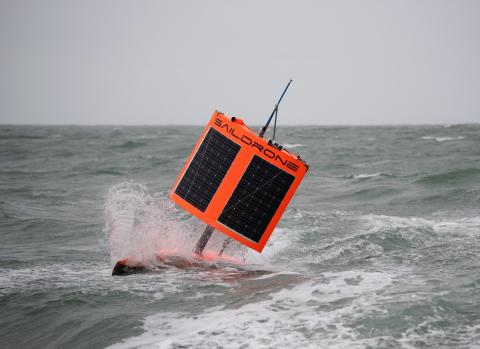
Saildrone becomes first unmanned system to circumnavigate Antarctica
A wind-powered USV called the saildrone has become the first unmanned system to circumnavigate Antarctica.
Known as SD 1020, the vehicle, equipped with a suite of climate-grade sensors, collected data in previously unchartered waters, which will offer insights into ocean and climate processes.
SD 1020 launched on Jan. 19 of this year from Southport in Bluff, New Zealand, and returned to the same port on Aug. 3. Over the course of 196 days, the USV sailed more than 13,000 miles around Antarctica, surviving freezing temperatures, 50-foot waves, 80 mile per hour winds, and collisions with giant icebergs along the way.
University of Alaska Fairbanks team completes first FAA-approved BVLOS mission in U.S.
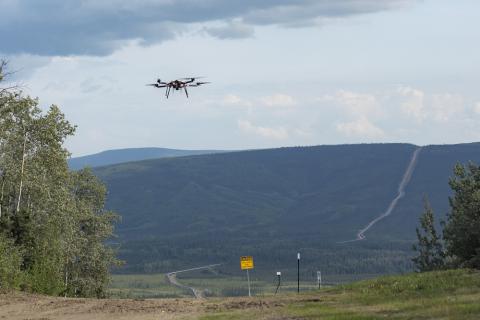
A University of Alaska Fairbanks (UAF)-led team recently completed the first FAA-approved true beyond visual line of sight (BVLOS) domestic flight of a UAS in the United States under the small UAS rule.
A Skyfront Perimeter long range hybrid-electric UAS flew 3.87 miles as it inspected a portion of the Trans-Alaska Pipeline. Operators flew the UAS from the university’s Alaska Center for Unmanned Aircraft Systems Integration.