
New York Governor Andrew M. Cuomo has announced that more than 500 students have been trained in the use of UAS for public safety operations at the State Preparedness Training Center in Oneida County, New York.
This milestone was reached in April during the New York State Division of Homeland Security and Emergency Services’ UAS Awareness workshop, which is one of four courses offered on UAS operations. The other courses offered are the UAS Part 107 Preparation Course, the UAS Basic Operator Course, and the UAS Advanced Operator Course.
The courses are designed to help educate public safety officials and first responders on how to integrate UAS into their public safety operations.
IHP
IHP
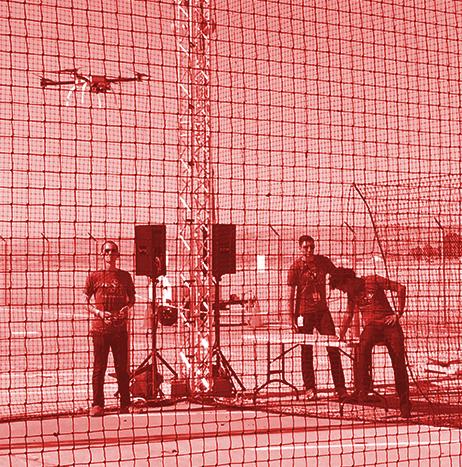
Speakers: Unmanned systems technology is changing lives, but public acceptance is key
As AUVSI President and CEO Brian Wynne introduced Tuesday’s keynote speakers at Xponential 2019, he first pointed out that the biggest challenges facing the professionals in the audience involve convincing a generally skeptical public that the new technologies they are fostering will improve their quality of life.
Wynne called for “complete agreement that the number one thing we need to work on is pubic acceptance.”
With that, speakers with divergent backgrounds expounded on how unmanned technology is fostering a cultural revolution of sorts, which is changing nearly every aspect of human existence and will continue to do so.

North Carolina's Spring Lake Fire Department uses UAS to rescue stranded kayakers
The Spring Lake Fire Department in Spring Lake, North Carolina recently used its UAS to rescue stranded kayakers from the Little River.
Over multiple days, the department rescued seven people in two separate incidents. One rescue utilized a boat and took the department all morning to pull a family of five from the river. The other water rescue, though, utilized the department’s new UAS, and took just minutes.
“These drones can fly a lot faster than walking though woods and going down to the river in a boat so just making eye contact and putting a visual image on somebody is key to this,” says Drone Pilot Brandon Fitzhugh, via ABC 11.

Virginia Tech engineers hope to redefine search and rescue protocols by teaming up human searchers with UAS
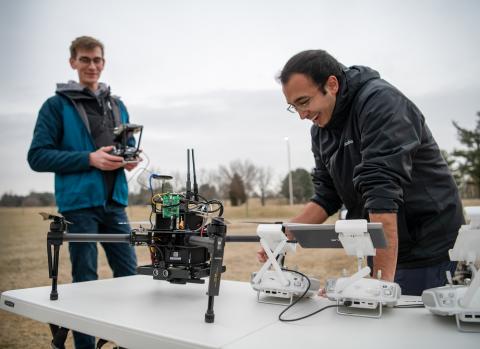
With the help of a grant from the National Science Foundation worth $1.5 million, a group of Virginia Tech engineers will pair up human researchers with UAS, in hopes of redefining search and rescue protocols.
Utilizing autonomous algorithms and machine learning, the UAS will complement search and rescue efforts from the air. Additionally, they will suggest tasks and send updated information to human searchers on the ground.
The researchers hope to make searches more effective by using mathematical models based on historical data that reflect what lost people actually do combined with typical searcher behavior, which balances autonomy with human collaboration.
Florida's Collier County Sheriff's Office rescues missing man using UAS
In Florida, Collier County Sheriff’s Office (CCSO) deputies recently used a UAS to find and safely recover a missing elderly man.
The man became lost for more than two hours after wandering from his residence. After the man failed to return to his residence, the Sheriff’s Office was contacted, and a ground search was conducted by patrol deputies, with help from the K9 Unit, Agriculture Unit, Traffic Unit and Investigations Division. Meanwhile, the Aviation Unit searched for the man by air.

Wing launches UAS delivery service in North Canberra, Australia
Wing, a subsidiary of Google’s parent corporation Alphabet, has launched a drone delivery service in North Canberra, Australia.
Through Wing’s service, customers can order a variety of items on Wing’s mobile app, and have them delivered directly to their homes via UAS in minutes.
SAE International, Ford, GM and Toyota form Automated Vehicle Safety Consortium
SAE International, Ford, General Motors (GM) and Toyota have announced the formation of the Automated Vehicle Safety Consortium (AVSC), which will work to safely advance testing, pre-competitive development and deployment of SAE Level 4 and 5 automated vehicles.
The AVSC will provide a safety framework that will foster the responsible evolution of autonomous technology before broad development, the entities say. They add that ultimately, the work will “inform and accelerate the development of industry standards” for autonomous vehicles (AVs), and harmonize with the efforts of other consortia and standards bodies throughout the world.

Maryland's Ocean Pines Police Department using UAS to search for missing people
The Ocean Pines Police Department in Ocean Pines, Maryland is now utilizing UAS to search for missing people.
Just last week, the department used its UAS to help in the search of a missing 79-year-old woman. The department also recently had two separate incidents of missing persons within the same week.
“There’s a large retirement population in Ocean Pines and the police department deals with its share of elderly residents with dementia who walk off and are reported missing,” says Sawyer, marketing and public relations director for the Ocean Pines Association.
“These residents need to be found quickly, which is capable with the help of the new unmanned aircraft system.”
Peachtree Corners helping local STEM high school launch UAS program
Through a collaboration with Peachtree Corners, Georgia and the city’s startup incubator, Prototype Prime, the new Paul Duke STEM High School in Norcross, Georgia was awarded a 2019 Infinite Energy STEAM Education Grant of $2,000, which will be used to launch the school’s UAS program.
The UAS program will be designed to engage students in the full life cycle of designing, building and operating UAS for professional applications, as well as racing.
University of Nebraska and partners prepping for UAS-based investigation of severe storms
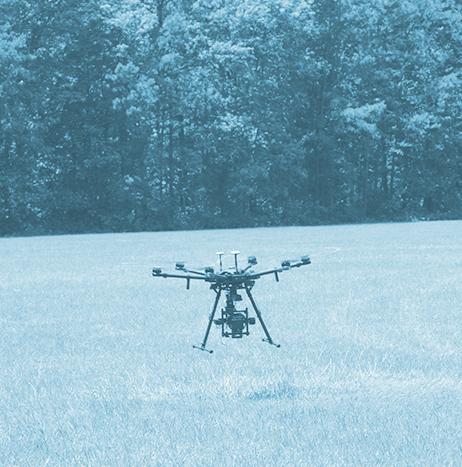
A UAS-based investigation of severe storms is set to launch in a few weeks.
Known as Targeted Observation by Radars and UAS of Supercells (TORUS), the project will be a collaboration between the University of Nebraska–Lincoln and three partner institutions, including Texas Tech University, the University of Colorado Boulder, and the National Oceanic and Atmospheric Administration’s National Severe Storms Laboratory.
The project will start on May 15, and fieldwork for the project will continue until June 16, covering a 367,000-square-mile area of the Great Plains from North Dakota to Texas, Iowa to Wyoming and Colorado.