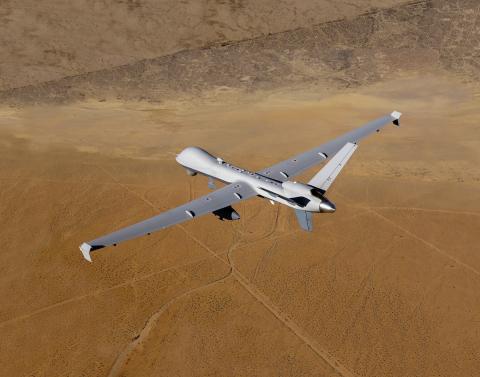
FLIR Systems has been selected by the U.S. Army to produce the Common Robotic System – Heavy (CRS-H).
CRS-H is designed to bolster the protection of EOD Soldiers by increasing standoff to interrogate hazardous devices in various military operations, as well as in homeland defense applications.
The value of the contract is $109 million. The capability is expected to be delivered beginning in the third quarter of Fiscal Year 2020.
Defense
Defense
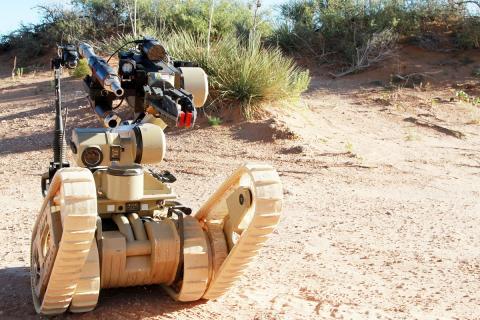
Gray Eagle ER UAS performs flight demonstration using Dynetics GBU-69B Small Glide Munition
General Atomics Aeronautical Systems Inc. (GA-ASI) has announced that from Aug. 21 to 22, a U.S. Army MQ-1C ER Gray Eagle Extended Range (GE-ER) UAS performed a flight demonstration using a Dynetics GBU-69B Small Glide Munition (SGM), which is a lightweight munition with increased effective range.
The demonstration was a collaborative effort between GA-ASI, the U.S. Army and Dynetics.
“The GE-ER operates at an altitude that provides an advantage when using stand-off munitions,” says David R. Alexander, president, GA-ASI.
“The reduced weight of the SGM allows the UAS to carry more munitions per aircraft.”
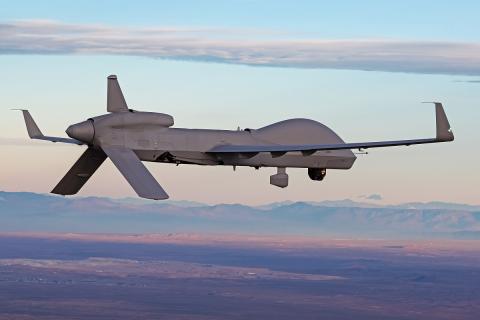
AeroVironment awarded contract to support Middle eastern ally's Puma AE and Raven B tactical UAS
A Middle eastern ally has awarded AeroVironment a firm fixed-price contract worth nearly $12 million for logistics support, spares, and repair services in support of its existing fleet of AeroVironment Puma AE and Raven B tactical UAS.
With a period of performance of two years, the contract was awarded on Oct.25, AeroVironment says.

Schiebel to deliver Camcopter S-100 UAS to Royal Thai Navy
Schiebel has won a competitive tender to equip the Royal Thai Navy (RTN) with its Camcopter S-100 UAS.
The UAS will be deployed next year to the Pakphanang District, in the province of Nakhon Si Thammarat in Thailand, and will provide the RTN frigate fleet with land and sea based Intelligence, Surveillance and Reconnaissance (ISR) capabilities.
According to Schiebel, this is the first time that RTN will use Vertical Take Off and Landing (VTOL) UAS for maritime operations.
“With the Royal Thai Navy, we have another major maritime contract to add to our growing list of customers,” says Hans Georg Schiebel, chairman of the Schiebel Group.
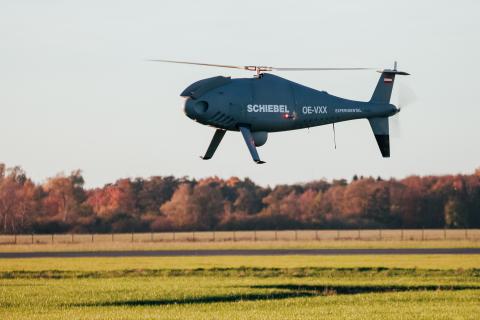
COMSUBPAC, University of Hawaii use UAS to deliver supplies to submarine
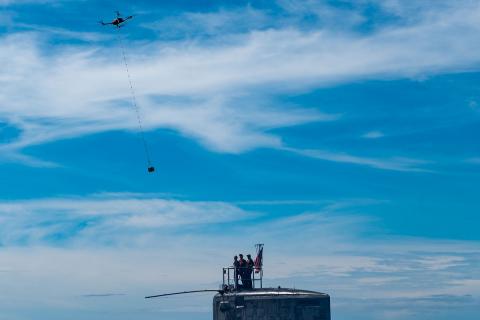
On Oct. 10, Commander, Submarine Force, U.S. Pacific Fleet (COMSUBPAC) and the University of Hawaii used a UAS to deliver supplies onto a submarine off the coast of Oahu, a U.S. island in the Central Pacific.
Carrying a five-pound payload that included circuit cards, medical supplies, and food, the UAS took the payload to Virginia-class fast-attack submarine USS Hawaii (SSN 776) while it was underway.
“What started as an innovative idea has come to fruition as a potentially radical new submarine logistics delivery capability,” says Lt. Cmdr. Christopher Keithley, assigned to COMSUBPAC.
Zipline demonstrates medical drone delivery technology during multinational military forces exercises
During multinational forces exercises with the United States Marine Corps (USMC) and the Australian Defense Force (ADF), Zipline successfully forward-deployed to Australia to pilot its life-saving UAS technology.
According to Zipline, the deployment sought to showcase how its logistics network of autonomous delivery UAS could help transform emergency medicine and critical care in conflict, as well as in humanitarian and disaster relief scenarios.
Atlas demonstrates UAS during Thunderstorm Demonstration and Experimentation Event in New York City
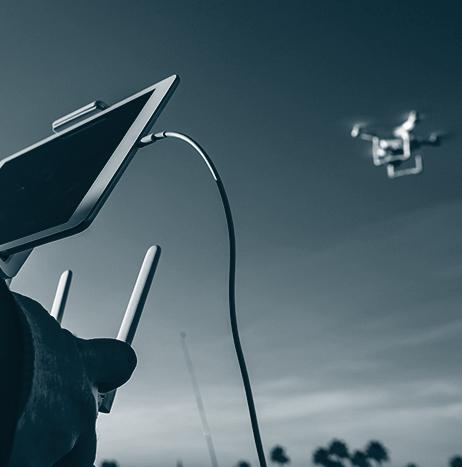
The Under Secretary of Defense for Research and Engineering (USD (R&E)) Rapid Reaction Technology Office (RRTO) recently invited autonomous UAS designer and manufacturer Atlas to demonstrate its AtlasPRO UAS during the Thunderstorm 19-2 Multi-Domain Operations Demonstration and Experimentation
From Unmanned Systems Magazine: Europe looks to unmanned systems for mine countermeasure work
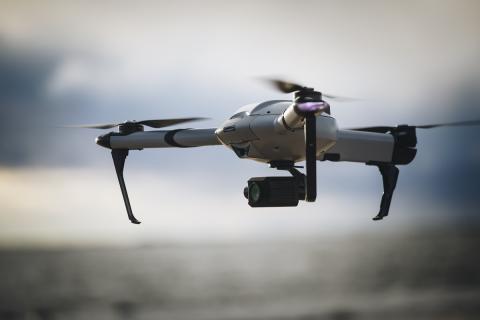
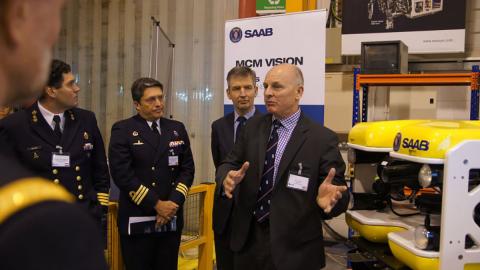
As increasing demands continue to be placed upon naval forces across the contemporary operating environment, European maritime forces are on the verge of successfully exploiting autonomous mine countermeasure (MCM) technology to not only save levels in manpower but also extend operational effectiveness.
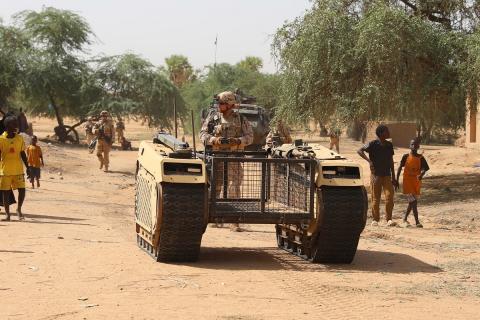
Milrem Robotics THeMIS UGV deployed for first time in Mali by Estonian Infantry Platoon
For the first time, the Estpla-32 infantry platoon, which is currently serving in Mali, deployed the Milrem Robotics THeMIS UGV during a military operation.
During the deployment, the UGV’s implementation in support of infantry in the conflict area was tested from both a tactical and a technical viewpoint.
U.S. Marine Corps successfully utilizes MQ-9A Reaper UAS during year of accomplishments
The U.S. Marine Corps’ (USMC) Marine Unmanned Aerial Vehicle Squadron 1 (VMU-1) has spent the last year completing a series of firsts thanks in large part to its use of GA-ASI's MQ-9A Reaper UAS.
The winner of the 2018 Marine Corps Aviation Association Unmanned Aircraft Squadron of the Year, VMU-1 relied heavily the MQ-9A Reaper UAS to complete many of its accomplishments. Over a 12 month period, the UAS has flown more than 4,800 flight hours of direct support reconnaissance.
Equipped with multi-sensor reconnaissance, the MQ-9A provided USMC’s forward operations critical support on the battlefield, while also serving as a proof of concept for the Deputy Commandant’s Marine Aviation Plan.