
Windhover Labs, which describes itself as an “emerging leader in open and reliable drone software,” has announced the successful test flight of its integrated flight software stack and ground control software.
Based in League City, Texas, Windhover says that this milestone not only solidifies a “groundbreaking technical approach,” but it also marks the general availability of its software ecosystem to original equipment manufacturers (OEMs), avionics manufacturers, and commercial customers.
BVLOS
BVLOS
Hazon Solutions to serve as preferred training partner for PrecisionHawk's BVLOS waiver consulting program
Hazon Solutions and PrecisionHawk have formed a strategic partnership that will result in Hazon serving as the preferred training partner for PrecisionHawk's Beyond Visual Line of Sight (BVLOS) waiver consulting program.
“This partnership is the perfect marriage of resources between two best-in-breed companies,” says Hazon CEO and co-founder David A. Culler, Jr. CAPT, USN (ret.).
“Under the FAA Pathfinder Program, PrecisionHawk has developed a strong safety case for enterprises to conduct BVLOS drone operations, of which training and crew experience are a key component, two services where HAZON excels.”
Arctic UAV adopts Kongsberg Geospatial IRIS UAS situational awareness application to enhance its BVLOS operations
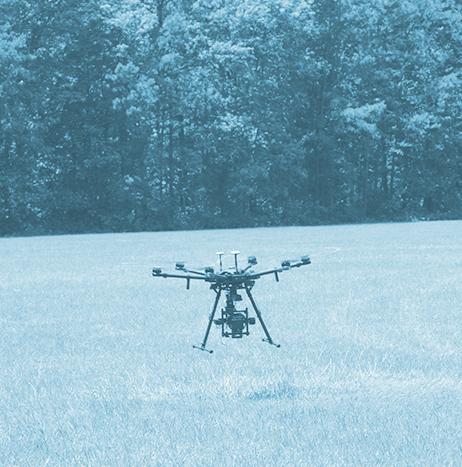
In an effort to enhance its beyond visual line-of-sight (BVLOS) operations, Arctic UAV has adopted the Kongsberg Geospatial IRIS UAS situational awareness application, which will provide “situational awareness safety” for Arctic UAV’s BVLOS flight operations within Canada’s Arctic.
Multiple UAS can be monitored simultaneously by a single operator using the Kongsberg Geospatial IRIS display technology. The technology also provides real-time calculation of aircraft separation and communications line-of-sight to enable BVLOS operations.
IRIS will provide the flight range with real-time 2D and 3D visualization of airborne track and weather data, as well as geo-fencing capabilities.

PACI receives Part 107 waiver to operate UAS BVLOS
Praxis Aerospace Concepts International (PACI) has announced that it has received a Part 107 waiver from the FAA to operate UAS beyond visual line of sight (BVLOS).
According to PACI, which is based in Southern Nevada, it is now one of the few companies in the United States allowed to offer BVLOS operations for professional aerial work.
“We are absolutely thrilled to be the first Nevada company to receive permission to fly commercial BVLOS,” says Jonathan Daniels, CEO of PACI.
“This is a major step over the hurdle for the commercial UAS industry. This will open up many opportunities for businesses already anchored here and those corporations who want to start-up here at our Searchlight Airpark facility.”
U.S. Department of the Interior adding up to 50 VTOL fixed wing UAS to its fleet
The U.S. Department of the Interior (DOI) has announced that it will soon have the use of up to 50 Vertical Take Off and Landing (VTOL) fixed wing UAS.
The new UAS are a result of an extended process to develop mission performance requirements and select the most useful type of aircraft to meet the needs. Andover, New Hampshire-based startup company Birdseyeview Aerobotics was awarded a contract to produce and train on the new UAS.
The new UAS weigh less than 10 pounds and are capable of carrying a variety of modular sensors. They have a service ceiling of 12,000 feet, and are operable in winds up to 25 knots.
GreenSight Agronomics receives waiver from FAA for BVLOS UAS operations
UAS services and agricultural intelligence provider GreenSight Agronomics has announced that on Dec. 15 of last year, it was granted a waiver from the FAA to operate its UAS beyond visual line of sight (BVLOS).
With this waiver, GreenSight, which provides daily monitoring services at top-5 agrochemical company test sites, golf courses, and farms, will be able to operate its UAS remotely from its Boston command center. The waiver still requires a local visual observer, though.
GreenSight, which says that it is just the ninth company to obtain a BVLOS waiver from the FAA, will use this waiver to begin testing BVLOS operations at a customer site.
Insitu demonstrates its ground-based UAS airspace situational awareness system
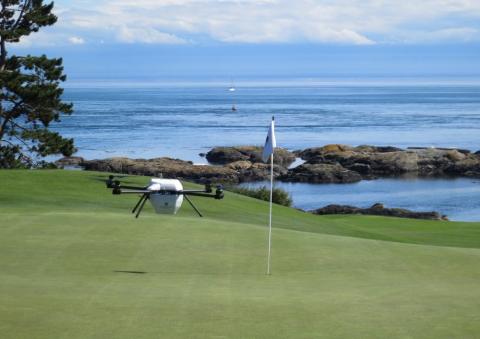
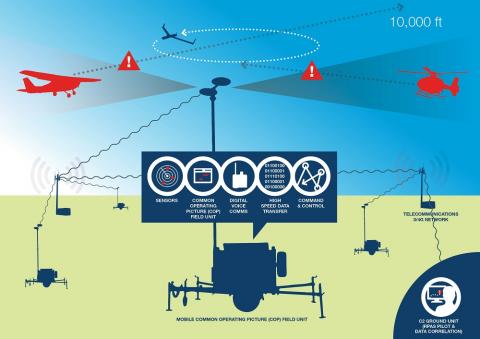
Insitu has announced the successful completion of a flight demonstration for its ground-based UAS airspace situational awareness system.
Under a program sponsored by the Queensland Government, Insitu, along with Boeing Phantom Works International, designed, developed, and tested the airspace situational awareness system in Australia.
The system is designed as one of the optional “layers” of safety to allow broad-area, beyond visual line of sight (BVLOS) capability for commercial UAS operations, by providing UAS operators with airspace situational awareness, specifically to help detect and avoid so called “non-cooperative” traffic.
QGC to leverage Remotely Piloted Aircraft Systems through contract with Insitu
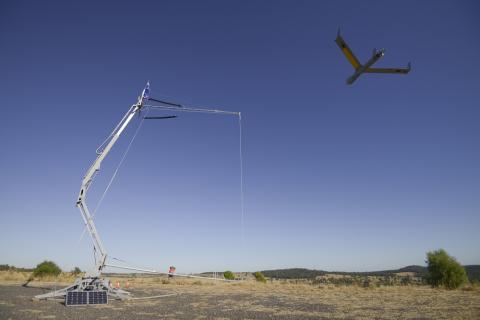
Insitu and QGC have announced a contract with each other that will result in Remotely Piloted Aircraft Systems (RPAS) from Insitu performing automated infrastructure inspection and management services at QGC’s operations within Queensland, Australia.
Described as a “first-of-its-kind program” in Australia, the contract in the Surat Basin “represents a significant move towards the use of autonomous air vehicles and advanced analytics in the area of broad acre infrastructure operations and maintenance.”
NUAIR Alliance opens evaluation and selection process of vendors for design and installation of Phase II of its BVLOS UTM test corridor
The NUAIR Alliance has opened the evaluation and selection process of vendor(s) for the design and installation of Phase II of its BVLOS Unmanned Traffic Management (UTM) test corridor.
Building off of the recently launched Phase I of the corridor around Griffiss International Airport in Rome, New York, the second phase will complete the corridor, which will facilitate testing of UAS platforms and sensors in the airspace between Rome and Syracuse, New York.