
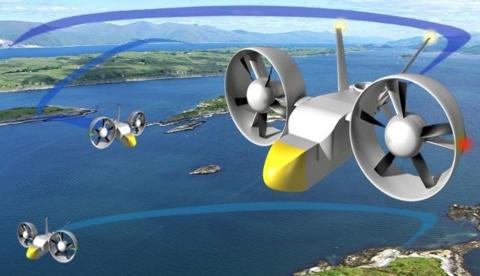
A group of engineers in the United Kingdom is planning to build a “mid-mass logistics drone” for global markets called the Sky Hopper.
Initially, the system will be aimed at remote and isolated communities, but the plan is for it to be “fully capable of near urban operations in due course.”
Technology
Technology
Deep Ocean Engineering uses ROV to inspect intake riser at Cherry Lake Dam
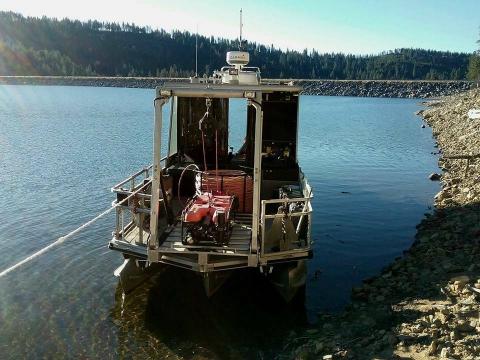
Deep Ocean Engineering, Inc.’s Phantom T4H remotely operated vehicle (ROV) has successfully completed an inspection of the intake riser at Cherry Lake Dam near Yosemite in California.
During the inspection, the ROV successfully chronicled the “state of the dam’s water intake riser and the position of the gates at a depth of 258 feet (78.6m),” which is approximately a quarter of the ROV’s rated capability.
A Dynamic Positioning (DP) capable triple pontoon boat with a forward mounted ROV Launch and Recovery System (LARS) was used during the inspection, as it sent the ROV to the intake riser’s coordinates, while maintaining a steady position.
CompassDrone unveils CIRRUAS program for public safety uses
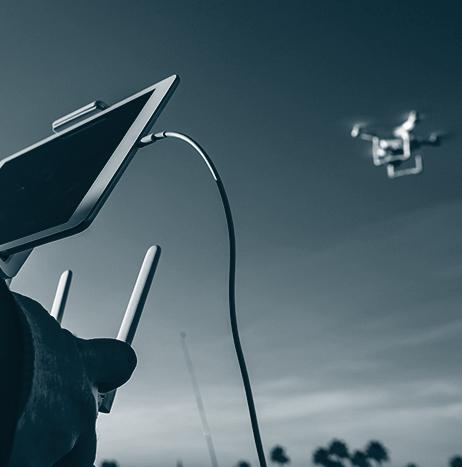
The Elbert County, Colorado, Sheriff’s Department will be one of the first departments in the country to participate in CompassDrone's Complete Incident Response Recovery Unmanned Aerial System (CIRRUAS) program, which is designed for public safety applications.
Based in Centennial, Colorado, CompassDrone, which provides UAS mapping consulting services, says that the CIRRUAS program is mainly designed for accident reconstruction and crime scene mapping, but it can also be used for search and rescue and reconnaissance operations as well.

India’s Flux Auto looking to create affordable self-driving technology for trucks
According to TechCrunch, a startup company in India called Flux Auto is looking to make autonomous driving technology “more widely available” for truck operators, especially those outside of the United States, by significantly lowering the cost of the technology.
Based in Bangalore, India, the 16-person startup would like to democratize autonomous systems, as it is working on technology that, when finished, could allow any kind of truck to be retrofitted with self-driving technology at a much lower price.
Weekend Roundup
This Week in the Unmanned Systems and Robotics World
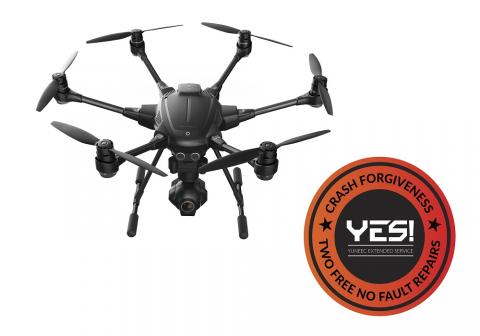
Yuneec will offer unlimited manufacturer defect repairs through its new Yuneec Extended Service (YES!) plan. YES! plans, which offer a variety of services from free shipping to non-warranty repairs, are available as a one or two-year plan for the company’s Breeze, Typhoon H and Typhoon H with Intel RealSense UAS. (sUAS News)
Primoco UAV SE announces new engine for unmanned aircraft
Primoco UAV SE, which is a Czech company that develops, manufactures and sells the Primoco UAV One 100/150, has announced its new “self-designed” Primoco 500 piston engine, which is designed for the company's unmanned aircraft, but can also be used by other aircraft manufacturers as well.
Developed by the company in nine months, the Primoco 500 is made of light aluminium alloy, and is an “air-cooled four-cylinder engine with a power output of 50 HP and a weight of 15 kg.”
According to Primoco UAV SE CEO Ladislav Semetkovský, the idea behind the development of the engine was largely born out of necessity, as the company’s newest aircraft, the Primoco UAV One 150, required a more powerful engine than the one that the Primoco UAV One 100 uses, which is a 20 HP engine.
UC Davis using AUV to measure climate change in Lake Tahoe
The University of California, Davis’ (UC Davis) Tahoe Environmental Research Center (TERC) has deployed an autonomous underwater vehicle (AUV) to evaluate how climate change is affecting Lake Tahoe.
Deployed earlier this month, the AUV, commonly known as a glider, will coast 150 meters under Lake Tahoe’s surface, taking measurements as it goes back and forth.
“It will continuously seesaw, or what we call yo-yo,” says UC Davis professor and researcher Alex Forrest, through KCRA.com.
UTA researcher looking to reduce risks of operating UAS over populated areas
Atilla Dogan, an associate professor of aerospace engineering at The University of Texas at Arlington (UTA), is looking to minimize the risk of using UAS over populated areas.
Dogan, along with other UTA researchers, plans on doing this by using a $550,000 National Science Foundation grant to gauge the risks posed by UAS. Following this, Dogan and his team will “create algorithms to reduce those risks while the vehicles perform specific tasks.”
For Erian Armanios, chair of the Mechanical and Engineering Department in UTA’s College of Engineering, the grant is just one example of the university’s “commitment to sustainable urban communities and data-driven discovery within the University’s Strategic Plan 2020: Bold Solutions | Global Impact.”
ULC Robotics develops VTOL UAS for commercial applications in utility industry
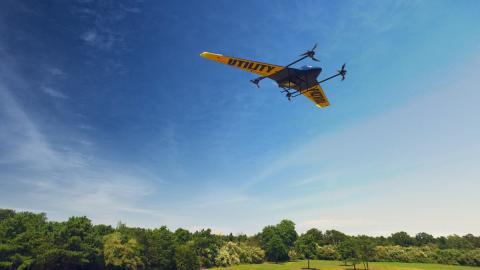
ULC Robotics, Inc. has completed successful flight testing of a newly developed vertical take-off and landing (VTOL) fixed-wing UAS.
As a robotics, energy services and research and development company with a focus on the energy and utility industries, UCL Robotics has developed this commercial-grade VTOL UAS to “meet the inspection needs of electric and gas utilities.”
Virginia’s Danville Life Saving Crew to use UAS for search and rescue missions
The Danville Life Saving Crew (DLSC) in Danville, Virginia will begin using small UAS to help them during search and rescue missions.
Through Piedmont Virginia Community College, five members of the DLSC spent 40 hours in UAS ground school, where they learned about FAA regulations, flight operations, human factors and radio communications, which prepared them for their FAA Remote Pilot Certificate exam.
Students participated in the field section of the UAS flight training on July 28. The five DLSC members, alongside Pittsylvania County Sheriff Mike Taylor and five members of the Pittsylvania Sheriff’s Office, demonstrated their flight skills at Dan Daniel Memorial Park.