
The United States Coast Guard is looking for a small UAS to use on its Legend-class national security cutters, to enhance the performance of these already versatile systems.
Among many missions, the cutters are used to intercept suspect vessels, patrol coastal waters, and undertake homeland security and counterterrorism missions.
“As long as we have been talking about this class of ship, there has always been the expectation that there would be an unmanned system involved,” says Cmdr. Dan Broadhurst, unmanned aircraft systems division chief in the Coast Guard's aviation capabilities office, via C4ISRNET.com.
Business Solutions
Business Solutions
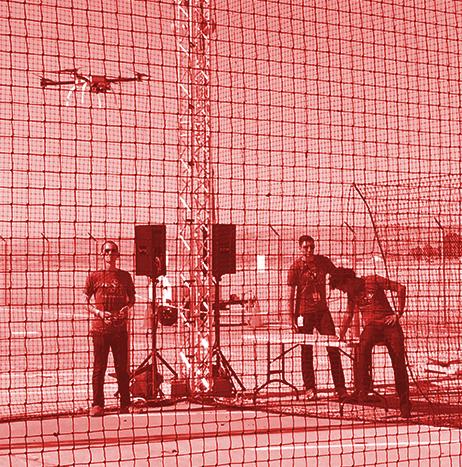
AeroVironment’s Wasp AE small UAS selected as a part of AUD $101 Million Small Unmanned Aircraft Systems Program
AeroVironment’s Wasp AE small UAS has been selected by the Australian Defence Force (ADF), for the AUD $101 Million Small Unmanned Aircraft Systems Program.
Weighing just under three pounds, the Wasp AE has a flight time up to 50 minutes, and can operate at a range of up to five kilometers.
Using its pan-tilt-zoom Mantis i22 AE gimbaled payload, the UAS, which is launched by hand, and can land on the ground, or in fresh or salt water, delivers “live, streaming color and infrared video.”
According to AeroVironment, the UAS provides portability and flexibility for operations such as infantry, littoral or maritime reconnaissance.
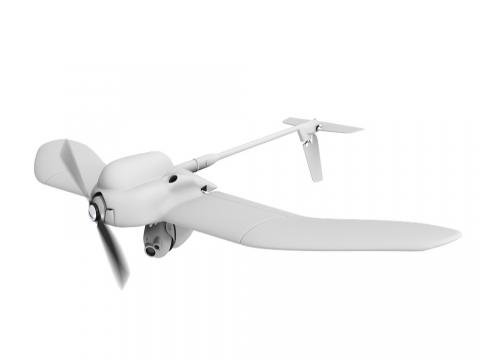
NuTonomy and Lyft to test self-driving vehicles in Boston
NuTonomy and Lyft have agreed to a research and development partnership that will result in the two entities testing self-driving vehicles in Boston in the “coming months.”
Through the partnership, the companies will “align their respective technology platforms to gather valuable research and insights into all aspects of ensuring a passenger’s comfort and safety during an autonomous vehicle (AV) ride.” Those aspects will include everything from routing and booking, to how the driving system performs, interacts and communicates with the rider.

SOAR Oregon opening new hangar at Pendleton’s UAS Range
On June 10, a ribbon cutting will be used to officially open a new 9,600 square-foot hangar at Pendleton’s UAS Range (PUR), which is located at the Eastern Oregon Regional Airport in Pendleton, Oregon.
The hangar is being opened by SOAR Oregon, which is a statewide nonprofit based in Bend, Oregon that seeks to encourage the growth of the UAS industry in the state.
Vahana, an electric, self-piloted vehicle being developed by A³, which is the advanced projects and partnerships outpost of Airbus in Silicon Valley, will be the first occupant of the new hangar, thanks to a partnership that was struck in November 2016 between Modern Technology Solutions, Inc. (MTSI) and SOAR Oregon.
Through that partnership, the two worked together on a flight test project for Vahana.
Canadian UAVs, Lockheed Martin Conduct First BVLOS UAS Inspections of Pipelines and Powerlines in Canada
Canadian UAVs and Lockheed Martin CDL Systems have conducted the first beyond visual line of sight (BVLOS) inspections using UAS in Canada, at the Foremost Centre for Unmanned Systems in Alberta.
Using Lockheed Martin’s Indago 2 UAS, which was compliant with Transport Canada, several pipelines, well sites and power lines were inspected during the flights.
“Canadian UAVs has been focused on creating an end-to-end paradigm in coordination with Transport Canada to conduct these operations outside of Restricted Military Airspace where our customers have a substantial regulatory and logistical needs to acquire actionable data,” says Canadian UAVs Inc. President Sean Greenwood in a press release.
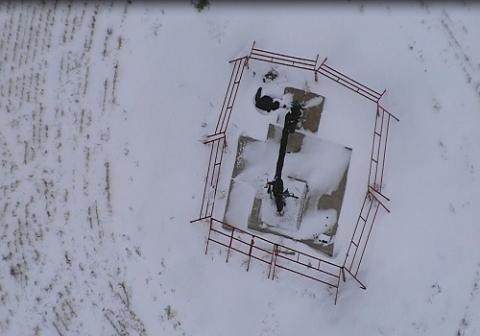
AkitaBox partners with PrecisionHawk to use UAS technology for facility inspections
AkitaBox, which is a facility management software company that automates maintenance, planning and inspections, has announced a partnership with commercial UAS and data company PrecisionHawk, which will result in the two working together to integrate aerial data into the facility management workflow.
Through the partnership, AkitaBox’s customers will have access to PrecisionHawk’s UAS packages and services to improve visibility for inspections, surveys and scans of a worksite. AkitaBox is hopeful that by offering better data capture capabilities, it will advance technology in the facility management space, which can ultimately yield better business outcomes for its clients.
Microdrones’ md4-1000 UAV added to Transport Canada's list of Compliant Unmanned Air Systems
Transport Canada (TC) has added Microdrones’ md4-1000 UAV to its exclusive list of Compliant Unmanned Air Systems, making Microdrones one of just eight companies in the world to earn such a distinction.
In order to earn compliance, Microdrones had to submit an assortment of application materials, including flight, maintenance, and systems design manuals.
“This compliance means that our platform meets a certain level of safety and will provide users with the opportunity to become a TC-compliant organization, gaining access to all the related advantages," says Sebastien Long, Microdrones' Sales Manager for Canada.
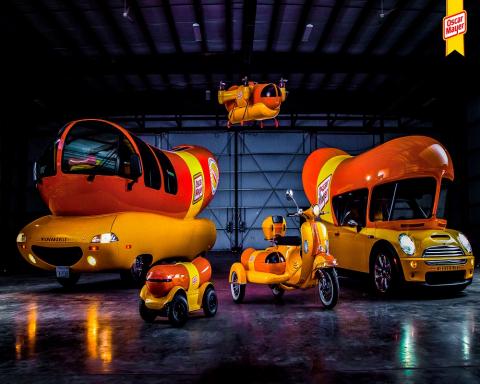
Oscar Mayer adds WienerDrone to its WienerFleet
American meat and cold cut production company Oscar Mayer has announced that it is expanding its WienerFleet to include a brand new WienerDrone, which will be the first hot dog-carrying UAS designed to make deliveries in remote locations.
The announcement of the new WienerDrone, as well as a new WienerCycle, comes after Oscar Mayer recently announced a major recipe overhaul across its entire portfolio, in which the company has removed all “added nitrates and nitrites1, by-products and artificial preservatives from the meat in its entire line of hot dogs.”
Unmanned delivery robots headed to the sidewalks of Florida
Unmanned delivery robots can now legally travel on sidewalks and in crosswalks in Florida, after Governor Rick Scott signed a new law that permits their operation in the state, as long as a human can take over operation of the robots remotely in the event that something goes wrong.
Florida joins Virginia, Idaho and Wisconsin, who all finalized similar legislation in their respective states earlier this year.
These state laws were passed with the support of Starship Technologies, a company that creates these types of robots, and has been testing them in in Redwood City, California and Washington, D.C. this year. Lobbyists for Starship worked on all of the state proposals.
Canada’s UAS Centre of Excellence granted permission to begin operations at its UAS test range
Canada’s UAS Centre of Excellence can now begin operations at its test range in Alma, Quebec, after receiving approval from Transport Canada.
Besides facilitating research and development, the test range will provide the UAS industry with “dedicated, restricted airspace,” where beyond visual line of sight (BVLOS) flights can be carried out.
“Transport Canada is proud of the progress we are making to support innovation and research in Canada’s drone sector,” says Marc Garneau, Minister of Transport.