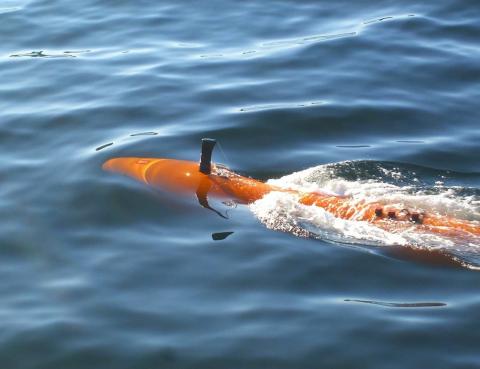
This Week in the Unmanned Systems and Robotics World
Drones are being used to survey seven UC natural reserves that were damaged during August wildfires. The drones are revealing the extent of the damage, and providing scientists with data that can help them understand the long-term and short-term damage caused by the fires. (Phys.org)
Mobility
Mobility
Weekend Roundup: October 30, 2020
This Week (and last week) in the Unmanned Systems and Robotics World
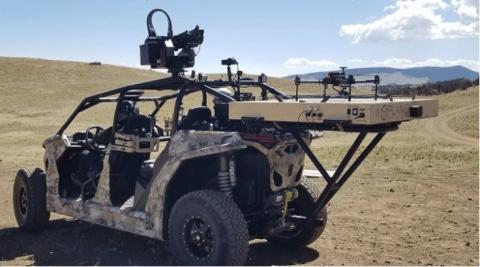
Australian Defence Force (ADF) Academy has announced that in August, it received two Mk6 UGVs. According to private Jacob Joseph, the academy received the vehicles after undergoing testing at Exercise Talisman Sabre. (Army Technology)
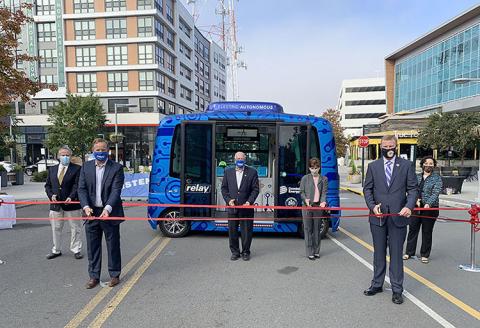
First Harvest Navigation selects Sea Machines' technology to launch first autonomous hybrid cargo vessel in U.S.
Sea Machines has announced that First Harvest Navigation, a marine transportation company that connects family farms to urban and suburban neighborhoods, has selected its technology to launch the first autonomous hybrid cargo vessel in the U.S.
A 63’ x 21.3’ aluminum catamaran, the U.S.-built, electric-powered Captain Ben Moore will be powered by Sea Machines’ SM300 autonomous command and remote-helm control system. The vessel will be the first hybrid cargo vessel to feature remote crew-assist technology and to generate zero emissions.
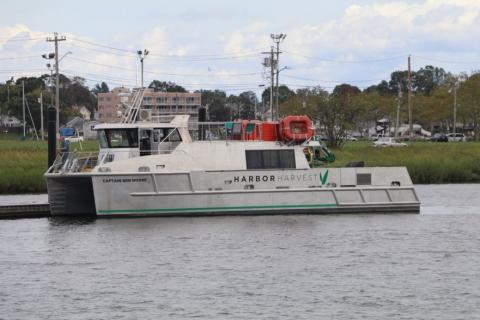
EasyMile, GreenTEC Campus launch Germany's first SAE Level 4 autonomous driving operation
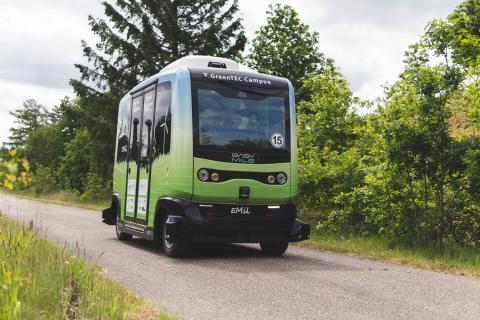
EasyMile and GreenTEC Campus have launched the first Society of Automotive Engineers (SAE) level 4 autonomous driving operation in Germany, on a closed site.
Known as “EMil,” the autonomous shuttle has been operating on the GreenTEC campus in northern Germany for two years. EasyMile and GreenTEC Campus worked with project partners such as EurA AG over the last six months to prepare for the move to level 4 operations.
“We strive to be highly innovative, but also sustainable and green in our ‘Green Valley’. We are therefore proud that we were able to bring this milestone to the north,” says Marten Jensen, managing director of the GreenTEC Campus.
MDOT-led coalition conducts multi-state automated truck platooning demonstration
On Thursday, Oct. 22, the Smart Belt Coalition (SBC) conducted an automated truck platooning demonstration that began in Pittsburgh and ended in Michigan.
A collaboration between the Michigan Department of Transportation (MDOT), transportation agencies in Ohio and Pennsylvania, and academic institutions in all three states, the SBC partnered with Locomation, the provider of the world’s first trucking technology platform to offer human-guided autonomous convoying, to complete the demonstration. The SBC and Locomation demonstrated the agency coordination and administrative and procedural requirements necessary for a truck platooning system to operate continuously through the three states.

Weekend Roundup: October 16, 2020
This Week in the Unmanned Systems and Robotics World
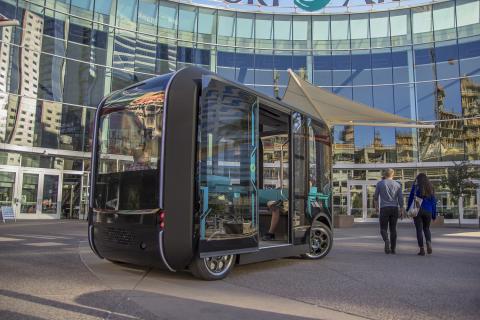
As part of an automated transportation trial in spring 2021, the latest version of Local Motors’ Olli driverless shuttles will begin operating in the city of Toronto next year. Expected to last six to 12 months, the test run will measure how well the autonomous vehicles will bolster Toronto’s mass transit system. (Engadget)
Brain Corp launches new UX design and reporting capabilities for autonomous mobile robots
Artificial intelligence software technology company Brain Corp has launched new user experience (UX) design and reporting capabilities that revolutionize the ease of which autonomous mobile robots (AMRs) can be used and managed at scale.
Designed to optimize usage of robots powered by BrainOS—an AI software platform that is used to build, operate, and manage multiple robotic applications—for different types of users on a global basis, the software enhancements also include powerful new software features for BrainOS-enabled robotic scrubbers that deliver improved cleaning efficiency and flexibility for commercial locations.

Velodyne Lidar's World Safety Summit on Autonomous Technology to focus on enabling safer mobility via autonomous technologies
Velodyne Lidar’s third annual World Safety Summit on Autonomous Technology (WSS) will take place as a virtual event on Oct. 22 from 9:00 a.m. to 1:00 p.m. PDT.
Featuring a diverse group of experts and thought leaders from industry, government, journalism and academia, the summit will seek to advance understanding about how autonomous technologies can enable safer mobility by addressing safety and autonomy issues in vehicle transportation.

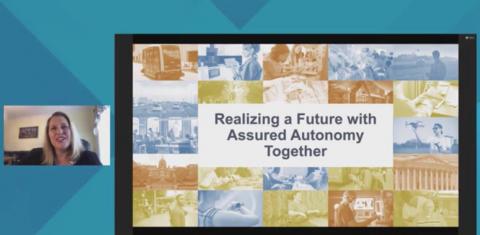
Dr. Cara LaPointe provides an overview of Assured Autonomy, the theme of Xponential 2021
As autonomy and artificial intelligence continue to be integrated into systems across society, making sure these systems work properly continues to be of the utmost importance.
“It’s really important to make sure these systems work like they’re supposed to, but it can be really hard,” says Dr. Cara LaPointe, co-director, Institute for Assured Autonomy, Johns Hopkins University Applied Physics Laboratory.
The goal is to reach a point of assured autonomy, where people can be confident that the autonomous systems around them are, and will, operate the way they are designed to. Reaching this point requires making sure that these systems are safe, secure, resilient and capable of operating within an ecosystem alongside humans and other technologies.
Weekend Roundup: September 25, 2020
This Week in the Unmanned Systems and Robotics World
Wilson Logistics will equip 1,120 of its trucks with Locomation’s platooning technology, with the first units to be delivered in 2022. The two companies have also extended their commercial partnership through at least the end of 2028. (VentureBeat)