
According to TechCrunch, Pittsburgh-based self-driving car startup Argo AI has received a permit from the California Department of Motor Vehicles that allows the company to test its autonomous vehicles in the state.
The permit is for one vehicle and two drivers.
Launched in 2016, Argo AI received a $1 billion investment from Ford Motor Company in 2017, just months after forming. Together, Ford and Argo AI are looking to develop a virtual driver system for Ford’s fully autonomous, SAE level 4-capable vehicles, which Ford hopes to have on the roads by 2021.
Mobility
Mobility
Texas Department of Transportation to create Connected and Autonomous Vehicle Task Force
The Texas Department of Transportation (TxDOT) has announced plans to create a Connected and Autonomous Vehicle (CAV) Task Force, which will serve as a central point for CAV advancement in Texas.
The task force will serve as a one-stop resource for information and coordination on all ongoing CAV projects, investments and initiatives in Texas. It will also be used to document the efforts of both public and private entities, and help facilitate partnerships.
Along with these responsibilities, the task force will also host industry forums and report lessons learned to enable progress and encourage more collaboration.

Ontario looks to grow its autonomous vehicle industry
During a recent visit at the University of Waterloo, Ontario, Canada’s Minister of Transportation Jeff Yurek showed his support for the innovation and growth of the autonomous vehicle industry within the Canadian province.
Ontario has updated its Automated Vehicle Pilot program to allow for more testing of emerging technologies, as well as to support future sales of the next generation of automobiles. These actions are a part of a recent package to create jobs by eliminating red tape and burdensome regulations.
Bosch to test its autonomous vehicle technology in Victoria, Australia later this year
This year, autonomous vehicle technology will be tested in rural areas of Victoria, Australia, thanks to the first on-road trial approved under the new Automated Driving System (ADS) permit scheme.
Bosch, which is currently developing autonomous vehicle technology, has been awarded $2.3 million from the Connected and Automated Vehicle (CAV) Trial Grants Program. The company has also been granted the state’s first ADS permit for on-road testing of highly automated driving systems.
“Victoria is leading the nation in the future of on-road technology and this trial is an exciting step towards driverless vehicles hitting the road,” says Acting Premier Jacinta Allan.
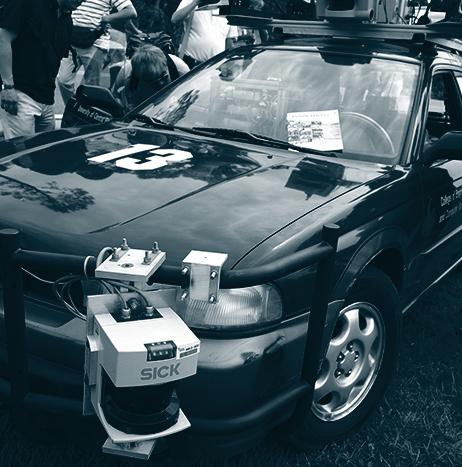
Japan's All Nippon Airways testing autonomous bus at Tokyo's Haneda Airport
Japan's largest airline All Nippon Airways (ANA) has begun the second stage of testing for an autonomous, driverless bus at Tokyo's Haneda Airport.
In collaboration with several companies, ANA began testing the autonomous bus on Tuesday, Jan. 15, in a series of trials scheduled to run through Jan 25.
During the trials, the bus will operate autonomously, but a human driver will be present to take over if necessary (Level 3 automation). The vehicle will be limited to the restricted area of Haneda Airport where aircraft and cargo vehicles are located.
ANA says that if the trials are successful, it will seek to implement the driverless bus technology into the airport by next year.
Driverless shuttle project expected to launch in Utah next month
According to KSL.com, the Utah Department of Transportation (UDOT) and the Utah Transit Authority have partnered to launch a driverless shuttle pilot project. The shuttle is expected to make its debut the first week of February at the Utah State Capitol.
The project will utilize an EasyMile electric shuttle to transport people from a variety of locations.
The locations have not been released by UDOT as of yet, but UDOT notes that the shuttle will most likely be tested on closed campuses as opposed to busy roads.
TuSimple making three to five fully-autonomous trips per day in Arizona
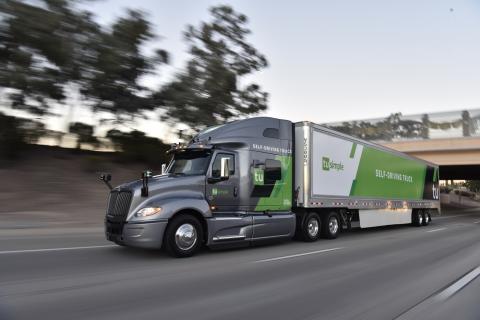
In response to growing commercial demand from 12 contracted customers, TuSimple has announced that it currently has 11 trucks operating fully autonomously in the U.S., with plans for that number to reach 40 by June.
TuSimple has also announced that right now, it makes three to five fully-autonomous trips per day for customers on three different routes in Arizona, with another route from Arizona to Texas expected to launch early next year.
According to TuSimple, it is the only self-driving truck company running daily fully-autonomous commercial routes from depot-to-depot, which requires highway driving, as well as local street driving.
Transdev and Torc Robotics partner to work on fully autonomous shuttle platform
During CES 2019 in Las Vegas, Transdev and Torc Robotics announced that they will work together on a fully autonomous shuttle platform, as the companies believe that shuttles and smaller vehicles will provide complementary mobility to existing public transportation networks across the globe.
Transdev and Torc will integrate Torc’s L4 Asimov self-driving software into the embedded intelligence system of the i-Cristal autonomous shuttle, which was unveiled in September 2018 by Transdev and French industrial company Lohr.
Xilinx and ZF Friedrichshafen partner to enable automated driving applications
With enabling automated driving applications in mind, Xilinx Inc., which specializes in adaptive and intelligent computing, has announced a new strategic collaboration with German car parts maker ZF Friedrichshafen that will result in Xilinx’s technology powering ZF's highly-advanced artificial intelligence (AI)-based automotive control unit known as ZF ProAI.
Xilinx’s Zynq UltraScale+ MPSoC platform is being used by ZF to handle real-time data aggregation, pre-processing, and distribution. The platform is also being used to provide compute acceleration for the AI processing in ZF's new AI-based electronic control unit.
Tech startup Spare believes its on-demand technology can be applied to driverless transportation systems
According to the Vancouver Sun, a Vancouver-based tech startup called Spare is part of a Norwegian/Canadian consortium that was selected as one of five competitors in an experiment to test fleets of automated buses in six different European cities.
Initially launched as a platform for arranging carpools, Spare has experience applying its technology to on-demand service-scheduling for transit systems in Oslo and Stavanger, Norway, which led to it being invited to join SAGA, the Norwegian-based team, according to Spare CEO Kristoffer Vik Hansen.