
This week, the Federal Aviation Administration (FAA) and AUVSI hosted the Episode IV of the UAS Symposium – Remotely Piloted Edition. The event brought together the unmanned aerial systems (UAS) community at a pivotal moment, which much is happening from new rules on remote identification to a focus on beyond visual line of sight (BVLOS) operations, all under a backdrop of the increased use of drones for humanitarian purposes and COVID-19 pandemic response.
The final segment of this virtual event series fostered discussions on how the UAS industry is doing more than ever with new technologies and uses. Below are top takeaways from the event for the UAS community.
BVLOS
BVLOS
FAA chief hails industry collaboration as part of regulatory path to trusted integration, including progress on BVLOS
In a keynote titled “Leading to Trusted Integration,” FAA Administrator Steve Dickson raised hopes of progress by the end of the year toward new beyond visual line of sight (BVLOS) rules.
But first, he invoked the vocabulary of aviation to acknowledge that regulation is often seen as a “drag” on the unmanned aerial systems (UAS) industry’s momentum.
Dickson, a former commercial pilot and vice president of Delta Air Lines, admitted to having “had my own opinions” on the subject of regulatory drag earlier in his career.
Autonomy, Connectivity Unlock the Future of UAS
Last month, AUVSI and SAE International hosted the first Business of Automated Mobility Forum, bringing together participants and speakers from across the automated mobility industry to develop actionable roadmaps to success.
During a keynote address by Skydio CEO Adam Bry and an Enterprise Solutions Series presented by Roy Goldman, VP of Product Management and Mike Ross, Sr. Director of Product Management at Skydio, Forum attendees learned about the importance of combining software advancements in autonomous flight and cloud connectivity to ensure drone uses across verticals can provide the most value possible.
Autonomy Will Unlock a New UAS Paradigm
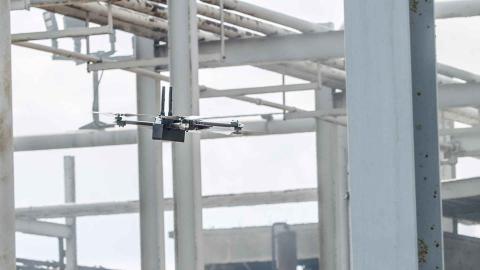
Why "North Dakota" – Making of a BVLOS Network
Join us to learn Why "North Dakota" is the place to be now for UAS and Autonomous Systems!
The UAS and autonomous systems market is growing exponentially in North Dakota. It is an exciting time for the industry with growth in research, technologies, inventions and investors, aided by new FAA rules and emerging roles for business use of unmanned aircraft and vehicles.
Speakers:
FAA Selects Iris Automation to Participate on New BVLOS Aviation Rulemaking Committee
San Francisco, Calif. (June 11, 2021) – Iris Automation has been selected by the Federal Aviation Administration to participate in the FAA's BVLOS ARC (Avi
AUVSI Welcomes Opportunity to Participate in FAA’s BVLOS ARC
With more and more industries relying on unmanned aerial systems (UAS) capabilities for their operations today - and many more expected to in the years ahead - the UAS industry broadly agrees that enabling routine operations beyond visual line of sight (BVLOS) is critical for high-value drone uses.
However, updates to existing regulatory frameworks will need to be made before the drone industry can fully take advantage of opportunities, such as small package delivery and infrastructure inspections, in a way that is repeatable, scalable, and economically viable.
Vantis Prepares North Dakota Ops Center for BVLOS Testing
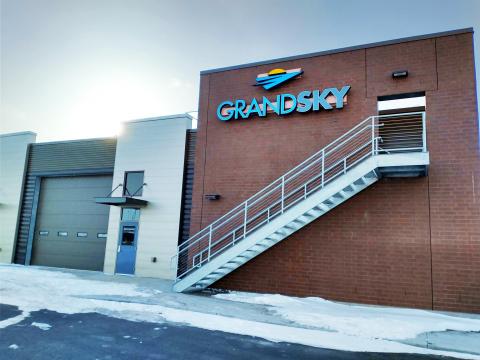
With its sights set on expanding its beyond visual line of sight (BVLOS) infrastructure across the country, Vantis recently signed a long-term agreement to house an operations center at the Grand Sky business and aviation park in western North Dakota, providing unmanned aerial system (UAS) operators and customers from across industries access to monitoring, data collection, and verification, lowering the barrier to entry for federal approval.
American Robotics receives approval to operate automated drones without human operators on-site
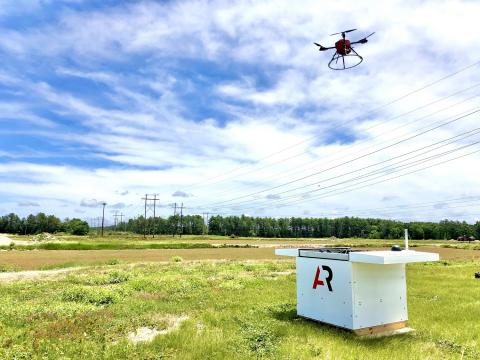
Automated drone systems developer American Robotics has become the first company approved by the FAA to operate automated drones without human operators on-site.
American Robotics is known for its Scout System, which is made up of three primary components: Scout, an autonomous, AI-powered UAS with advanced imaging payloads; ScoutBase, a weatherproof base station that serves as the nerve center and communication hub for Scout; and ScoutView, a secure web portal and API that enables remote interaction with the system, data, and resulting analytics anywhere in the world.
Draganfly awarded new patent for VTOL cargo delivery drone
Draganfly has been awarded a new patent for a vertical take-off and landing (VTOL) cargo delivery drone with variable center of gravity.
According to Draganfly, the design is ideal for beyond visual line of sight (BVLOS) operations, and for transporting goods in hard to reach areas or flight over people at night.
“With the signing of a signature customer and now this key industry patent we are confident in our role as an important global player in drone delivery space,” says Cameron Chell, CEO of Draganfly.
“This showcases Draganfly’s continued focus on IP and highlights the strength and innovation of our engineering team.”

Iris Automation to use latest funding to improve Casia DAA system, continue participation in BEYOND program
Iris Automation has closed a successful round of $13 million in Series B venture capital funding.
Known for its Detect-and-Avoid (DAA) system, Casia, Iris Automation will use this latest investment for several initiatives, including to expand machine learning and AI capabilities and testing to improve and extend the Casia system’s performance envelope; to continue to improve detection and classification capabilities of the Casia system to support expanded use cases, operational environments and aircraft compatibility; and to build out fulfillment capabilities to produce, deliver and support the growing installed base of aircraft OEM partners and end use customers, and enter new markets associated with aircraft safety.