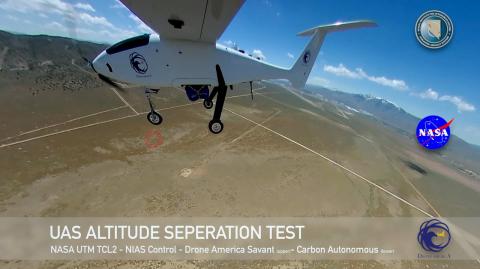
Thanks to support in the form of a three-year, $1.33 million grant from NASA’s University Leadership Initiative, researchers at North Carolina State University will launch a project that seeks to research and develop high-performance communications, networking and air traffic management (ATM) systems, which includes navigation and surveillance for UAS, as well as manned aircraft.
The NC State Group will work with David Matolak from the University of South Carolina (USC), Hani Mehrpouyan from Boise State University, and Benjamin Boisvert from Architecture Technology Corporation (ATCorp) to develop “multi-band radio designs, “millimeter wave” (mmWave) propagation measurements/modeling, navigation and surveillance techniques for manned/unmanned aircraft, and ATM simulations.”
Airspace
Airspace
50 airports to provide Automated Airspace Authorization for UAS starting this fall
This fall, 50 airports will begin providing Low Altitude Authorization and Notification Capability (LAANC), which will give UAS operators the ability to “apply for instant, digital approval to fly in U.S. controlled airspace using the same applications they use for flight planning and in-flight situational awareness.”
Currently, FAA authorization is required for flights in controlled airspace, at certain times of day, or near sensitive locations. Authorization requests are subject to long waiting periods and labor-intensive manual approvals, which can add more time to, or entirely halt, the process of trying to fly UAS commercially.
Warm Springs FAA UAS Test Range expands operations to two Oregon Airports
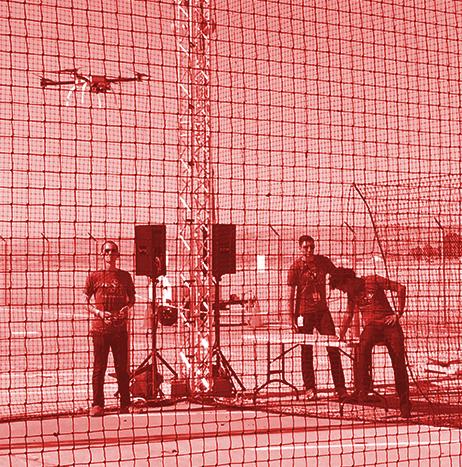
The Warm Springs FAA UAS Test Range, which is a member of the Pan Pacific UAS Test Range Complex (PPUTRC), is expanding its operations to the Prineville and Madras Airports in Oregon.
According to Warm Springs FAA Test Range Manager, Liz Stalford, the expansion will go a long way in the Test Range helping UAS clients with future missions.
“The expansion project will allow Warm Springs to support Unmanned Aircraft Systems clients who require an airport for launch and recovery as well as having certified maintenance facilities readily available,” Stalford says.

Airspace Integration: How Commercial Drone Operators Can Play a Role and Effect Change
One year after the Small UAS Rule (Part 107) took effect lawmakers and commercial drone operators are still learning to share the National Airspace and integrate drones to their fullest potential. AUVSI's advocacy team strives to educate lawmakers about issues important to the drone community and works in conjunction with the FAA to promote safe flying.
This webinar will highlight important aspects of FAA regulations governing commercial drone use and provide insights into how drone operators can affect regulatory change to support the growth of the industry.
UAS policy expanded in congressional FAA reauthorization bills
Before leaving for the Independence Day recess, congressional committees with oversight of the Federal Aviation Administration approved separate pieces of legislation in the U.S. House and Senate to reauthorize the agency and provide it with funding. The bills included many provisions advocated by AUVSI to expand policy for the operation of unmanned aircraft systems.

AeroVironment’s Wasp AE small UAS selected as a part of AUD $101 Million Small Unmanned Aircraft Systems Program
AeroVironment’s Wasp AE small UAS has been selected by the Australian Defence Force (ADF), for the AUD $101 Million Small Unmanned Aircraft Systems Program.
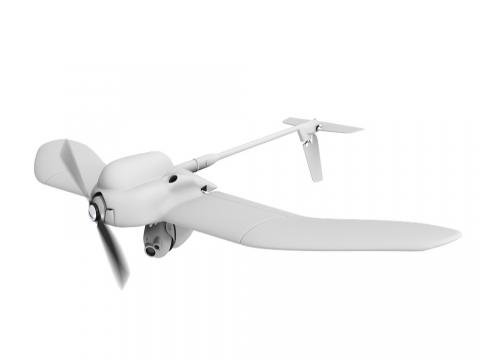
Weighing just under three pounds, the Wasp AE has a flight time up to 50 minutes, and can operate at a range of up to five kilometers.
Using its pan-tilt-zoom Mantis i22 AE gimbaled payload, the UAS, which is launched by hand, and can land on the ground, or in fresh or salt water, delivers “live, streaming color and infrared video.”
According to AeroVironment, the UAS provides portability and flexibility for operations such as infantry, littoral or maritime reconnaissance.
Navy tests Mine Warfare Rapid Assessment Capability system that uses UAS to detect buried and submerged mines
A recent technology demonstration at Marine Corps Base Camp Pendleton tested the new Mine Warfare Rapid Assessment Capability (MIW RAC) system, which is a portable, remote-controlled system that uses a UAS to detect buried and submerged mines.
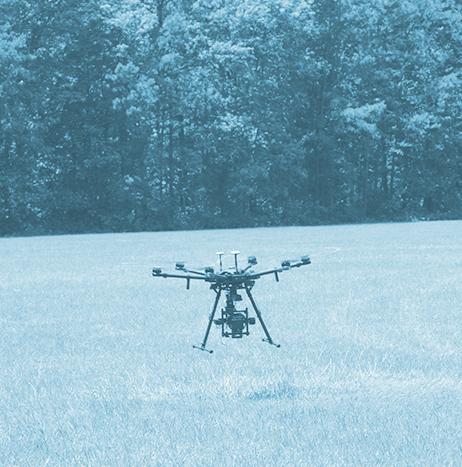
MIW RAC, which is sponsored by the Office of Naval Research’s (ONR) TechSolutions program, includes a tablet device, and a one-pound quadcopter UAS, which is equipped with “an ultra-sensitive magnetometer sensor system,” that allows the UAS to detect mines, and provide real-time search data to a handheld Android device.
Korea to use UAS to monitor prisons and inmates
The Ministry of Justice in Korea has announced that the government plans on using UAS to monitor prisoners at three different penitentiaries starting in July, as a part of a six-month test operation of unmanned aerial systems.
The UAS, which will be able to fly at night, and will be equipped with a camera that can send real time videos, will be used for several tasks, such as patrolling the inside and outside of prisons, monitoring the movements of inmates, and tracing fugitives.
“Use of drones will help raise the efficiency of watching prisoners and save costs in personnel,” says a justice ministry official, via the Korea Times.
NIAS and NASA continue testing of NASA's UAS Traffic Management System
In late May, the Nevada UAS Test Site and its NASA partners used five different UAS to demonstrate several different operational scenarios, including aerial survey operations and parachute initiated emergency supply deliveries.
The UAS were flown as a part of the specific NASA Unmanned Aircraft System (UAS) Traffic Management (UTM) missions, and thanks to “strategically placed visual observers (VO) and sophisticated Command and control (C2), communication, detect, and avoid technologies,” the UAS were also flown beyond the pilot’s visual line of sight.