
Last month, AUVSI joined with CTA in a statement expressing concern over legislation that has been introduced in multiple states to roll back federal authority of the airspace, restrict and tax drone operations, and upend years of industry-government collaboration towards unlocking the full potential of drone technology for commercial use.
Policy
Policy
The UAS Policy Landscape
Even in the absence of significant federal legislation, the policy landscape for unmanned aircraft systems (UAS) has continued to evolve. The FAA recently released its highly anticipated UAS remote identification rule, along with new frameworks for operations over people a

The Autonomous Future of UAVs
In October 2020, Skydio announced that the North Carolina Department of Transportation (NCDOT) was granted a first-of-its-kind approval by the Federal Aviation Administration (FAA) to conduct operations beyond visual line of site (BVLOS) for bridge inspections. These inspections are conducted using Skydio Autonomy, an AI-based flight engine that enables operations in obstacle-dense environments and areas without GPS.
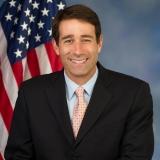
Rep. Graves identifies opportunities for industry-govt collaboration
To kick off the final day of the virtual segment of XPONENTIAL 2021, Congressman Garret Graves delivered keynote remarks on the current state of of government-industry collaboration.
Rep. Graves represents Louisiana’s Sixth Congressional District in the U.S. House of Representatives, where he serves as the Ranking Member on the House Transportation and Infrastructure Committee’s Subcommittee on Aviation. In his remarks, he identified opportunities to build consensus and support innovation that advances shared priorities.
Industry Standards Supporting Assured UAS Autonomy
As autonomous technologies become more integrated into the design and operation of the next generation of aircraft, industry standards can ensure system safety and help regulators to keep pace with evolving technology.
In a panel today at XPONENTIAL 2021, leaders from the FAA and industry discussed how consensus-based standards are critical in supporting the integration of unmanned aerial systems (UAS).
Building consensus-based standards
As the UAS industry seeks to formulate standards, panelists shared several factors that will be key for building consensus:
Standards should account for both risks and benefits in implementing an autonomous system into the aircraft.
AUVSI Announces New Executive Committee, Members of Board of Directors
Media Contact: Michael Robbins, mrobbins@auvsi.org
AUVSI’s Accomplishments and Strategic Priorities for the Future
As the world's largest nonprofit organization dedicated to the advancement of unmanned systems and robotics, AUVSI empowers members with unmatched access to the global unmanned systems community and the tools to help navigate this ever-evolving ecosystem. AUVSI truly embodies the best of the unmanned systems industry, and it has been my honor to serve as Chairman of the Board for this wonderful organization over the last two years.

Panel shares insights and recommendations on cyber security for drone operations
A six-member panel of security-minded industry leaders spent a Tuesday afternoon session explaining and exploring what many consider to be an increasingly important, under-examined question: What precautions should companies that use unmanned aircraft be taking to ward off cyber attacks?
The group, along with other security experts not present, took up the question to help the Joint Authorities for Rulemaking on Unmanned Systems develop what is being called a “Cyber SORA” (Specific Operations Risk Assessment) protocol. JARUS is expected to release a document for external comment in the coming week.
Integrating Urban Air Mobility toward assured autonomy
New technologies start in the research stage and undergo experimentation before becoming operationalized – and unmanned and autonomous systems are no exception. While small unmanned aerial systems (UAS), like drones, have reached the final stage, Urban Air Mobility (UAM) technology is still in the research and experimentation phases.
FAA’s Remote ID Rule Will Enable Drone Integration
Last month, the Federal Aviation Administration (FAA) implemented new regulations addressing the remote identification of drones and drone operations over people and at night. The rules make critical steps toward assured autonomy by enabling more complex UAS uses, which will ultimately lead to more drone deliveries, public safety operations, and infrastructure inspections.
During today’s XPONENTIAL 2021 sessions, AUVSI hosted a panel of leading experts who were involved in the rulemaking process. Their discussion on next steps and standardization demonstrated why AUVSI approaches public policy under the umbrella of three principles: safety and security, government-industry collaboration, and performance-based regulations.